Partner with Us
 Online shop


General
2025.06.20
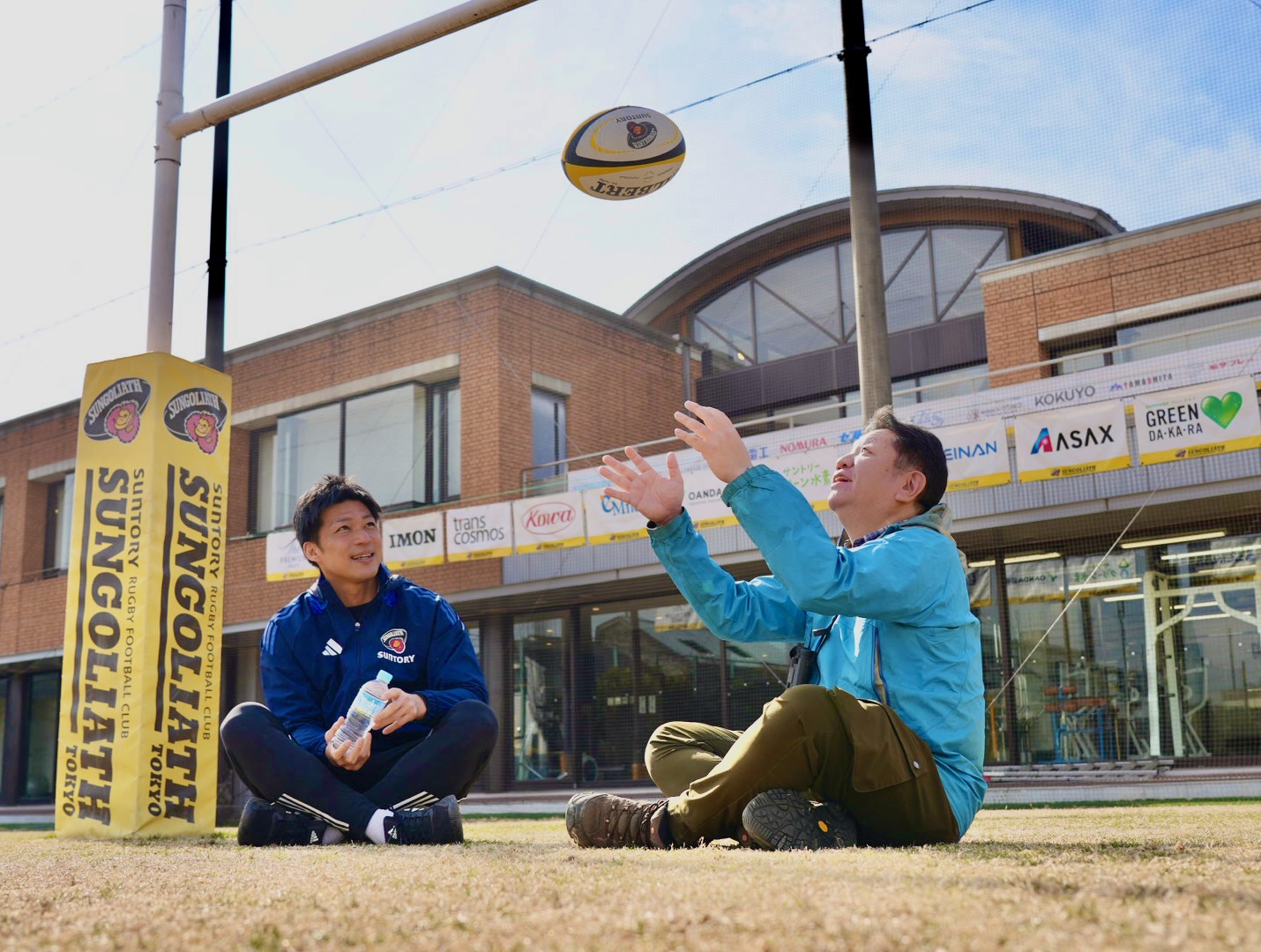
The <SPIRITS OF SUNTORY SPORTS> series is a long-form interview project that digs into the "passion" behind Suntory's sporting activities and their vision for the future from diverse perspectives.
For our fourth installment, we present a cross-industry dialogue between Koji Taira, who oversees the TOKYO SUNTORY SUNGOLIATH School Academy and regional liaison, and Tomoyuki Ichida, a Tennensui no Mori Group Specialist
Nurturing Players × Nurturing Forests. These two men, who dedicate their days to the act of "cultivation," sat down to discuss their work across different fields. What kind of future are they envisioning? (Interview Date: February 2026)
《Koji Taira》
TOKYO SUNTORY SUNGOLIATH School Academy & Regional Liaison
Joined Suntory in 2005 and became a core player for the SUNGOLIATH. He earned 32 caps for the Japan National Team and recorded a try in the World Cup. After retiring in 2015, he worked in the Sales Department before taking over the School Academy in 2021, where he manages player development and academy operations.
《Tomoyuki Ichida》
Suntory Holdings Ltd. Sustainability Management Promotion Headquarters
(Regional Co-creation) Tennensui no Mori Group Specialist
Joined Suntory in 1999. After working in on-premise liquor sales at the Yokohama and Chugoku-Shikoku branches, he moved to his current role in April 2019. He oversees the "Natural Water Sanctuary" initiative (domestic water resource cultivation) and bird conservation activities
"Mizu-Iku"
— I understand you met prior to this dialogue. What were your first impressions of each other?
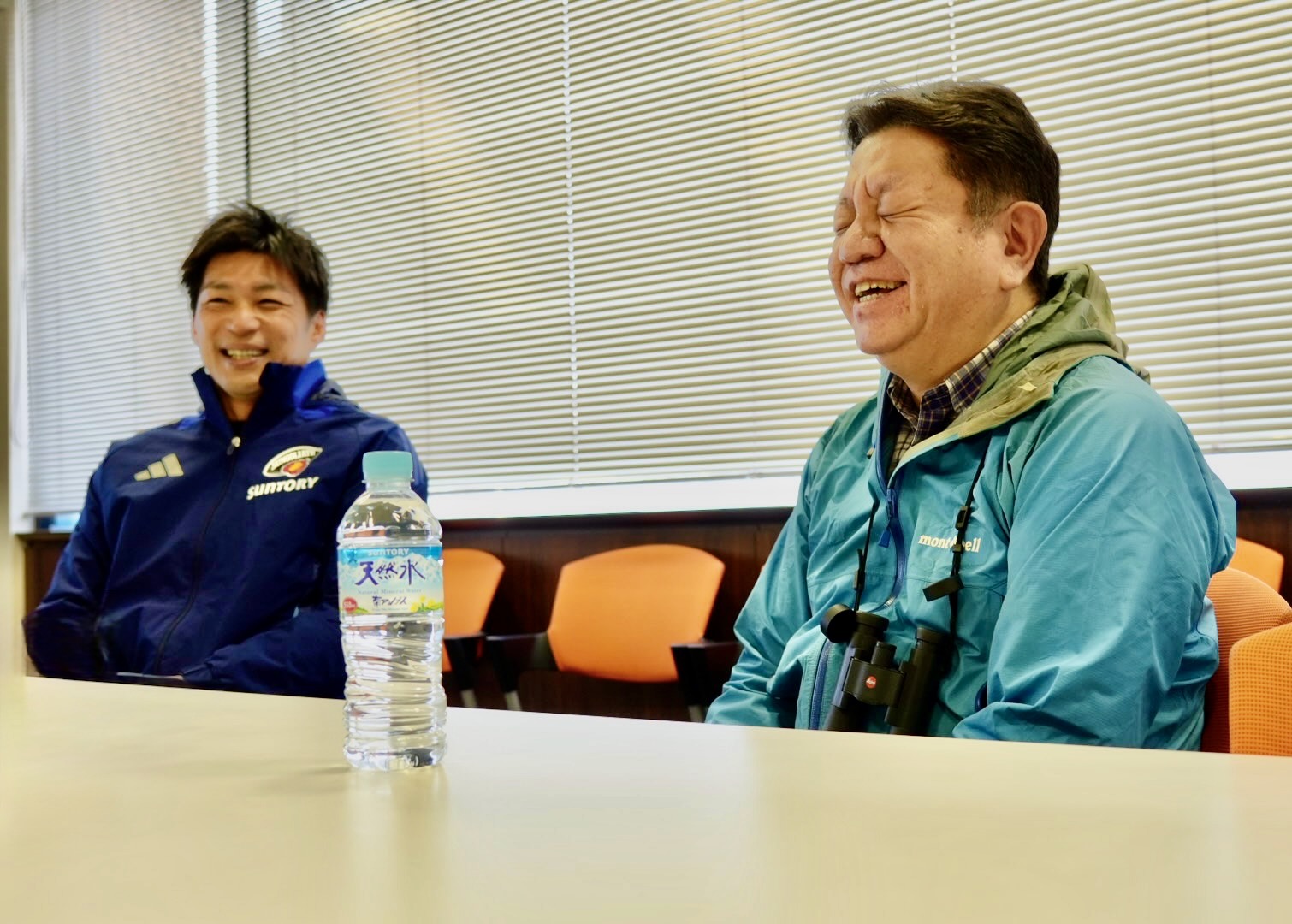
Taira: That was the first time we met. Although his work is completely different from what I've been involved in, I felt we shared a common thread in the aspect of "cultivation" and "nurturing." I've been looking forward to today's talk.
Ichida: For me, my first thought was, "Oh, it's Taira-senshu!" (laughs). I watched him during his active playing days, so it felt like meeting the real deal. I've been in my current role for a little over six years; before that, I was in liquor sales. Now, I do work that might make people in other companies wonder, "Does such a department even exist?" Between rugby's regional promotion and interacting with children, our work shares a deep connection in wanting to be rooted in the community and pass something on to children.
— Do you conduct "Mizu-Iku" for children?
Ichida: Yes. We provide it as a form of next-generation environmental education for elementary school students. While I don't teach the classes personally, I have been in charge of the operations, so I often visit schools to observe the lessons and outdoor programs.
— What specifically happens during "Mizu-Iku"?
Ichida: There are two main activities. One is the "Forest and Water School," a nature experience program held during summer vacation at four locations near our water plants (Northern Alps, Southern Alps, Okudaisen, and Aso). Children enter the forest to experience nature firsthand, followed by a plant tour. In the forest, anything can happen—frogs might wash down from upstream, or birds and insects might suddenly appear. The second activity is a "Visiting Lecture," where our instructors go directly to schools to study the water cycle alongside teachers.
— I hear biodiversity is crucial for forest sustainability.
Ichida: Exactly. In our forests, raptors like hawks and eagles are at the top of the ecosystem. If the environment allows them to raise chicks, it means there are plenty of small animals to eat, which in turn means the plants below them are flourishing. That's why we use raptors as our symbol.
— Does flourishing vegetation lead to better water?
Ichida: When vegetation is rich, the soil becomes soft and porous, making it easier for rain to soak in. As the rain filters through, "bountiful water" is nurtured.
— So, it starts with the raptors?
Ichida: Well, raptors won't just show up because you call them (laughs). We aim to create an environment where they want to come. To do that, we perform forest maintenance like thinning and undergrowth clearing.

Learning Through Failure
— Growing a forest involves various stakeholders—forestry workers, botanists, universities, ornithologists, and landowners. Is it a difficult balance to strike?
Ichida: With so many stakeholders, building consensus is indeed a challenge. I prioritize constant communication and careful explanation, but the most important thing is going to the site and talking in person. There are experts in every field; the role of a Suntory employee is to coordinate those experts as they share opinions. Since the discussions get very technical, our staff has to study hard to keep up.
— When you try something and it doesn't work immediately, how do you judge the next step?
Ichida: If you only have one way of trying, you're stuck if it fails. We usually prepare about three different solutions and start by testing them on a small patch of land. Even if it works there, it might fail elsewhere because the land is different, so we make it a point not to expand too quickly. Since nature doesn't give immediate results, our agreements with local governments aren't for one or two years—they are 30-year units. We manage the forest with an image of 100 years from now, so in reality, we are failing at many things along the way (laughs).
— Taira-san, is there anything in this that applies to nurturing your academy students?
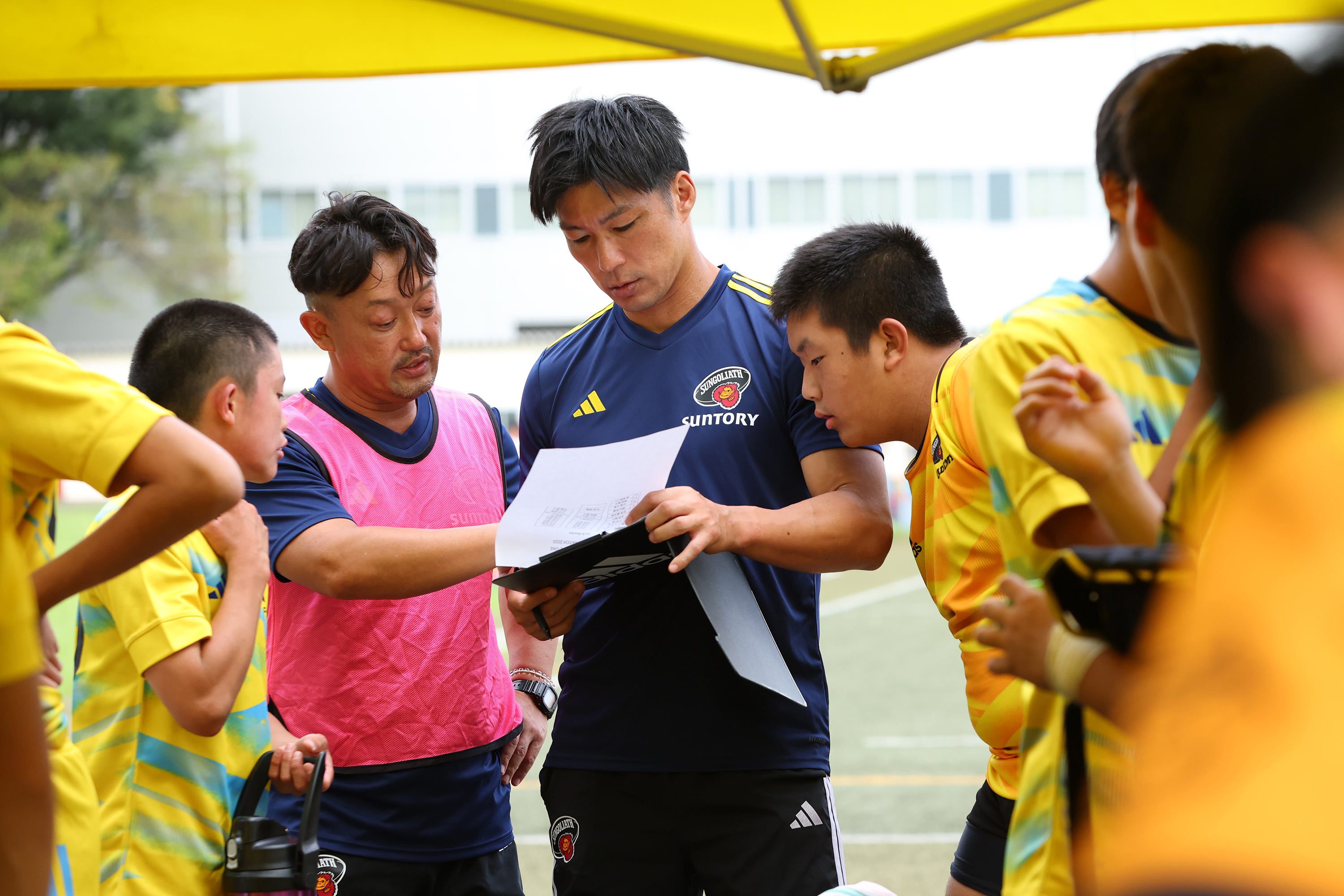
Taira: We currently have about 90 students at our Fuchu and Aoyama branches. Regarding "trial and error," I see a parallel in how a child who is doing well now won't necessarily be the one who grows the most later. Conversely, some children who struggle initially might see massive growth in the future. I feel that the current generation of children changes significantly depending on how we communicate and coach them.
— What kind of coaching methods do you use?
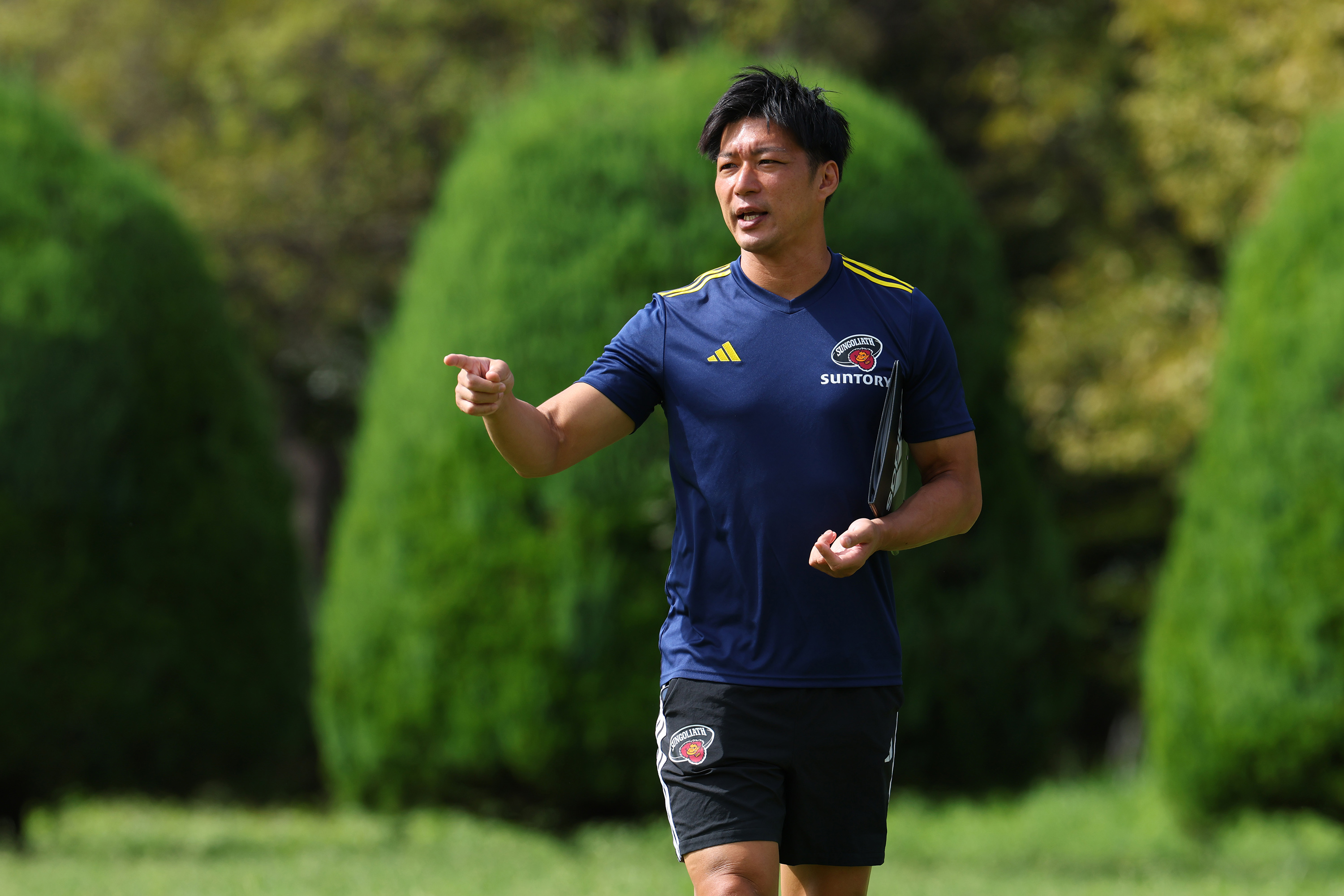
Taira: I try to be mindful of the shift in coaching styles. In the past, it was "Coach First"—the coach gave strong instructions. But now, since it's the children who are playing the game, we use a "Player-Centered" approach. We try to communicate in a way that encourages them to think for themselves and play based on their own decisions.
The Importance of Patience
— It seems "patience" is a common theme for both of you.
Taira: Yes, various forms of patience are vital. However, in my line of work, the results might appear a bit faster. That said, I don't change things immediately just because results aren't visible. I want them to achieve the intended goal, so if one approach isn't working, I change the method while keeping the goal the same.
— That requires the coach to have a vast toolkit of methods.
Taira: Exactly. It's hard work, and I can't do it alone. I ask people like Norikazu Suzuki and the professional SUNGOLIATH coaches, "In this situation, what's the easiest way to get the message across?" I was actually just asking Coach Aoki (Yusuke) a moment ago. I gather opinions from various people, break them down, and create practice methods that even academy students can execute. It's truly trial and error.
— Ichida-san, you also have to make judgments. What are your criteria?
Ichida: We rarely change things immediately. Even when we plant trees, they might not grow at all for the first year or two, but then suddenly shoot up after five years. It's a difficult judgment call. We decide by constantly monitoring the situation and listening to the advice of academic experts.
— How often do you monitor?
Ichida: There are periods where I might enter the same forest area once every two weeks. Generally, it takes about two to three years to get a full cycle of observation. After listening to various opinions, I finally decide, "Let's go with this." Since we are dealing with nature, things don't always go as planned; it's a process of trial and error.
Directly Linked to Business
— When you moved from Sales to your current department, what did you think?
Ichida: At first, I couldn't even understand the words people were saying (laughs). Usually, when people speak, you can visualize the kanji characters in your head, but with forestry terms, I couldn't "translate" them mentally. For example, when most people hear kaibatsu, they think of "altitude" (meters above sea level). In forestry, kaibatsu means "cutting down all trees". I had to study from scratch. I was born in Wakayama, but I wasn't a nature-loving kid—I spent my time playing in shopping districts, never in the mountains (laughs).
— How did you find the "reward" or the fun in it?
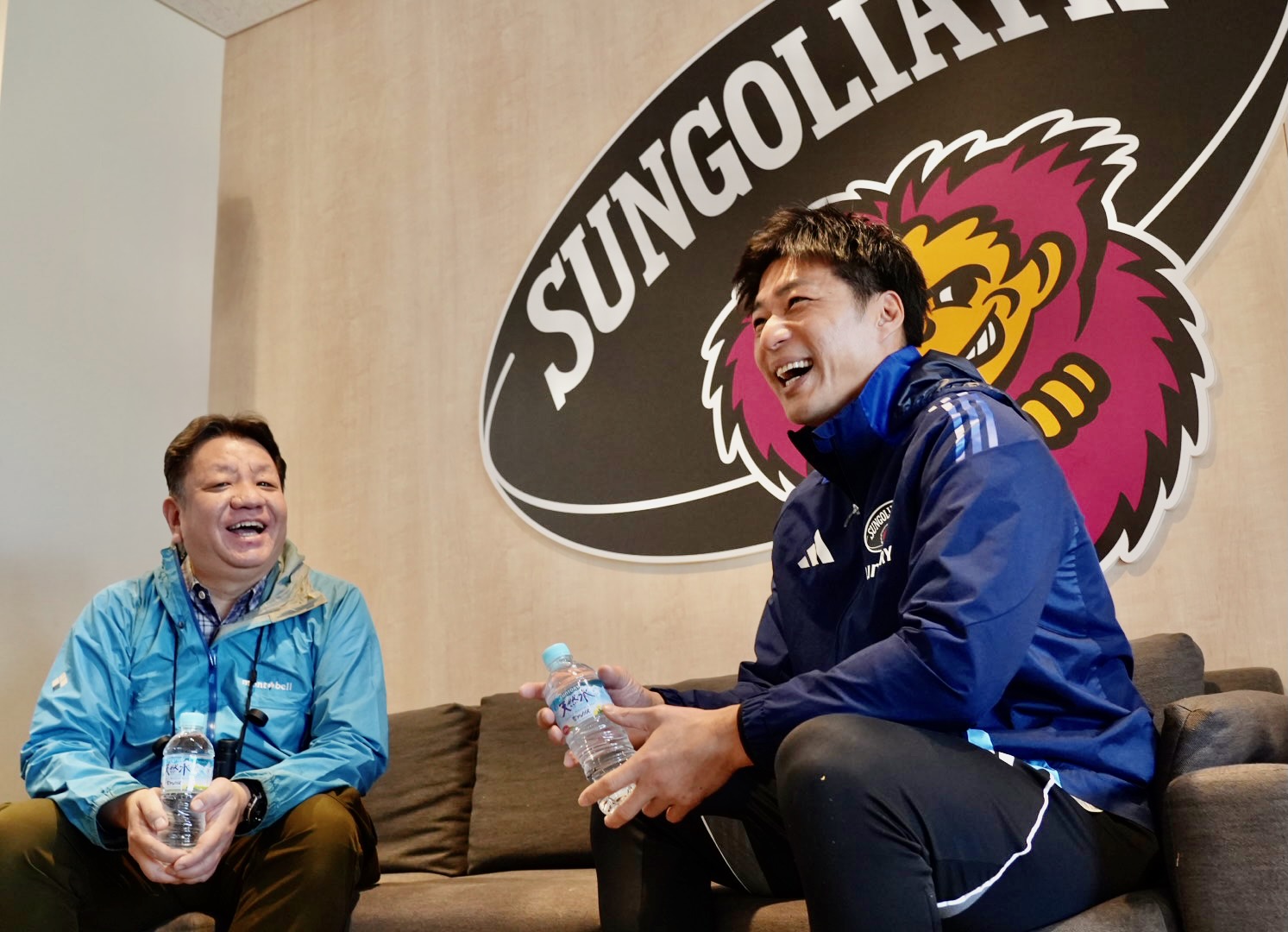
Ichida: People often mistake this for volunteer work. We aren't doing this as a hobby or a charity; we are protecting water, which is our most vital raw material. We view this as a core business activity. The fact that it's directly linked to the business makes it incredibly rewarding.
— Taira-san, what is your reward?
Taira: Seeing the growth of the children firsthand. That is the best part. These kids don't just come to the academy; they go to local schools on weekends and attend regular school during the week. Seeing the changes from week to week—like a child who couldn't say hello before suddenly greeting me, or someone starting to ask questions—that growth makes me happy.
— How many colleagues do you have in your department, Ichida-san?
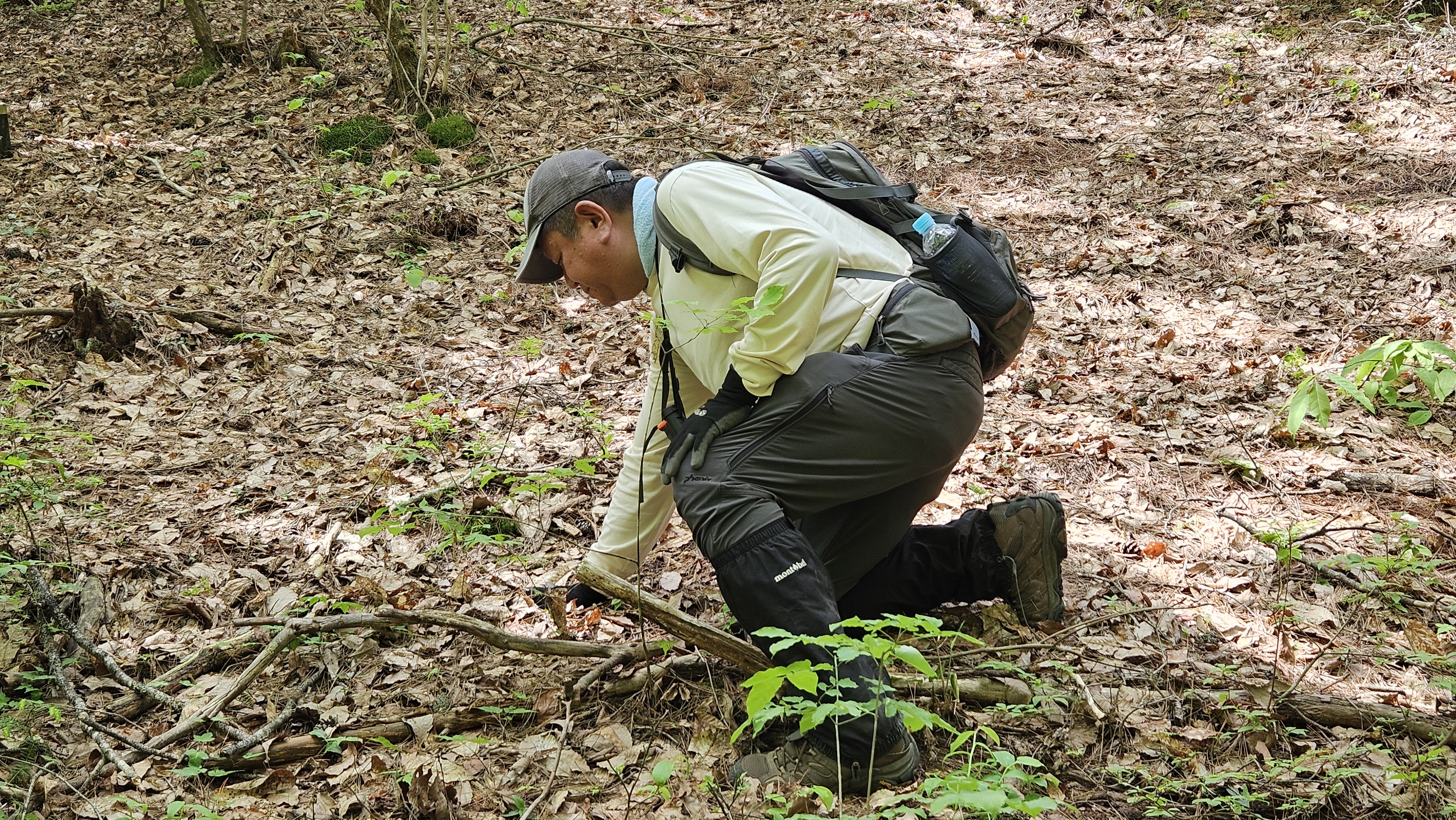
Ichida: We manage 26 forest locations, but only four of us are actually "on-site" staff.
Taira: That's surprisingly few!
Ichida: It is. But in Japan, it's very rare to find a company where employees go into the forest themselves to work, let alone a company with a dedicated department for it.
— Which area are you in charge of, Ichida-san?
I handle Gunma and Nagano. Each person is responsible for 6 or 7 locations—some handle up to 10. Consequently, I travel a lot. Last year, I checked and realized I spent over 100 days on business trips. I've grown used to it; I feel more like a local now. Sometimes local government officials see me so often they ask, "Weren't you just here? Do you live here?" (laughs).
— What would you call your job category?
Ichida: Since we aren't doing industrial forestry, we don't demand "efficiency" from our professional partners. The priority is the soil. We ask them to perform the "tedious" work of ensuring the soil doesn't wash away. My role is essentially a "Coordinator." I adjust the various opinions of experts to move things forward. I don't think there are many examples outside of forestry companies where employees venture into the woods themselves.
— Is there excitement in doing something so new?
Ichida: Yes, it's interesting. In nature, results take a long time, but when they finally appear, it's thrilling. In the Northern Alps, there were records of northern goshawks nesting in red pine forests, but as those forests weakened, the environment became unsuitable for them. We've been working since 2019 to restore that environment. In 2022, the goshawks actually returned, nested, and raised chicks. Even the experts said, "That wouldn't happen so quickly; it's a miracle." We even captured it on video.
— Coordination sounds tough. What is the most difficult part?
Ichida: There are people with many different viewpoints, so getting them to understand our activities is a significant task. For example, some staff members attend annual briefing sessions for local villages. We have to be very meticulous with that.
Understanding Characteristics First
— Taira-san, what are the challenges for you?
Taira: There are many. We have two schools, Aoyama and Fuchu. Fuchu involves a selection process, so it's full of highly skilled kids who dream of joining the SUNGOLIATH. At Aoyama, it's a mix—some just want to enjoy rugby or are there because they love the team. Should I raise their mindset or lower it to normalize the group? Right now, I try to find a middle ground. Lowering the bar isn't good for high-mindset kids, and raising it too high might discourage others. I coach in a way that lifts the bottom up.
— Both of you are "nurturing." What do you value most in that process?
Ichida: We start by thoroughly investigating the characteristics of that specific forest. Every forest has different issues. We place great importance on identifying those challenges beforehand.
Taira: We follow the club spirits of SUNGOLIATH—PRIDE, RESPECT, NEVER GIVE UP—and guide their mindset based on these. For example, "NEVER GIVE UP" doesn't just mean "don't quit"; it means I want them to fail many times. I want them to take more challenges because it's okay to fail. The worst thing is to not try at all. If they play with their full effort, even if they aren't skilled yet, it will reach the coach. I tell them to challenge themselves.
— That sounds close to the "Yatte Minahare" spirit.
Taira: Yes. I try to communicate in a way that is typical of Suntory and typical of SUNGOLIATH. Since it's called the SUNGOLIATH Academy, I believe we shouldn't waver on that.
— What does "typical SUNGOLIATH" mean?
Taira: Almost every team has an academy now. If we don't pursue what makes us unique to SUNGOLIATH, we'll be seen as just like everyone else. So, we created a concept sheet with the "future SUNGOLIATH" at the center and thought deeply about what we could do. As a result, the program is very rich. I'm almost jealous of the kids. For instance, active players like Cheslin Kolbe visit after practice, and there is support from trainers. We bring out that SUNGOLIATH identity.
— You also have to nurture successors, don't you?
Ichida: Yes, the organization itself must become sustainable, so that is very important. Not everyone in the company knows about this activity yet, so I take every opportunity to explain it to employees.
— In their second year, all employees experience forest maintenance at a "Tennensui no Mori," right?
Ichida: Yes, it's part of the training. If they went as brand-new hires, they might just feel they were dragged to a forest without knowing why. By going in their second year after a year of business experience, they can see how their work connects to the forest. It becomes personal.
Taira: Rugby also needs successors to keep this activity going. I already have a few people in mind (laughs), but I hope some SUNGOLIATH players will say they want to become academy coaches after they retire.
Rugby Experience Plus Mizu-Iku
— What is your ideal future?
Ichida: Since our contracts are in 30-year units, I believe this is an activity the company should continue forever. To do that, we must make the system sustainable. If only Suntory does this, it's just one part of environmental action. We need to collaborate with various other companies.
— Do you think this will spread globally in the future?
Ichida: Yes. While the activities aren't identical, we have started global initiatives. Japanese methods don't always work because of climate differences, but we already apply what we call the "R-PDCA cycle"—investigating, planning, and executing—on a global scale.
Taira: My dream is for the children working hard here now to join the SUNGOLIATH in the future.
— Do you imagine them joining the SUNGOLIATH every year?
Taira: At the earliest, they would go through high school and university and become a SUNGOLIATH player seven years later. Ideally, one student would join every year. That would also strengthen the team. I want to work toward that goal.
— Anything you want to ask each other?
Taira: About three years ago, active SUNGOLIATH players took a "Mizu-Iku" class with elementary school children in Minato City. SUNGOLIATH now has agreements with Minato City, Fuchu City, Chofu City, Mitaka City, and Yamanashi Prefecture. Could we conduct "Mizu-Iku" classes in those areas as well?
Ichida: In areas where Suntory has plants, we have comprehensive agreements where all 4th graders receive "Mizu-Iku" lessons. We have cases of community-rooted activities like that.
Taira: SUNGOLIATH is already doing rugby experiences in Fuchu City, but it's also an area with a beer plant. It would be interesting to add "Mizu-Iku" to that.
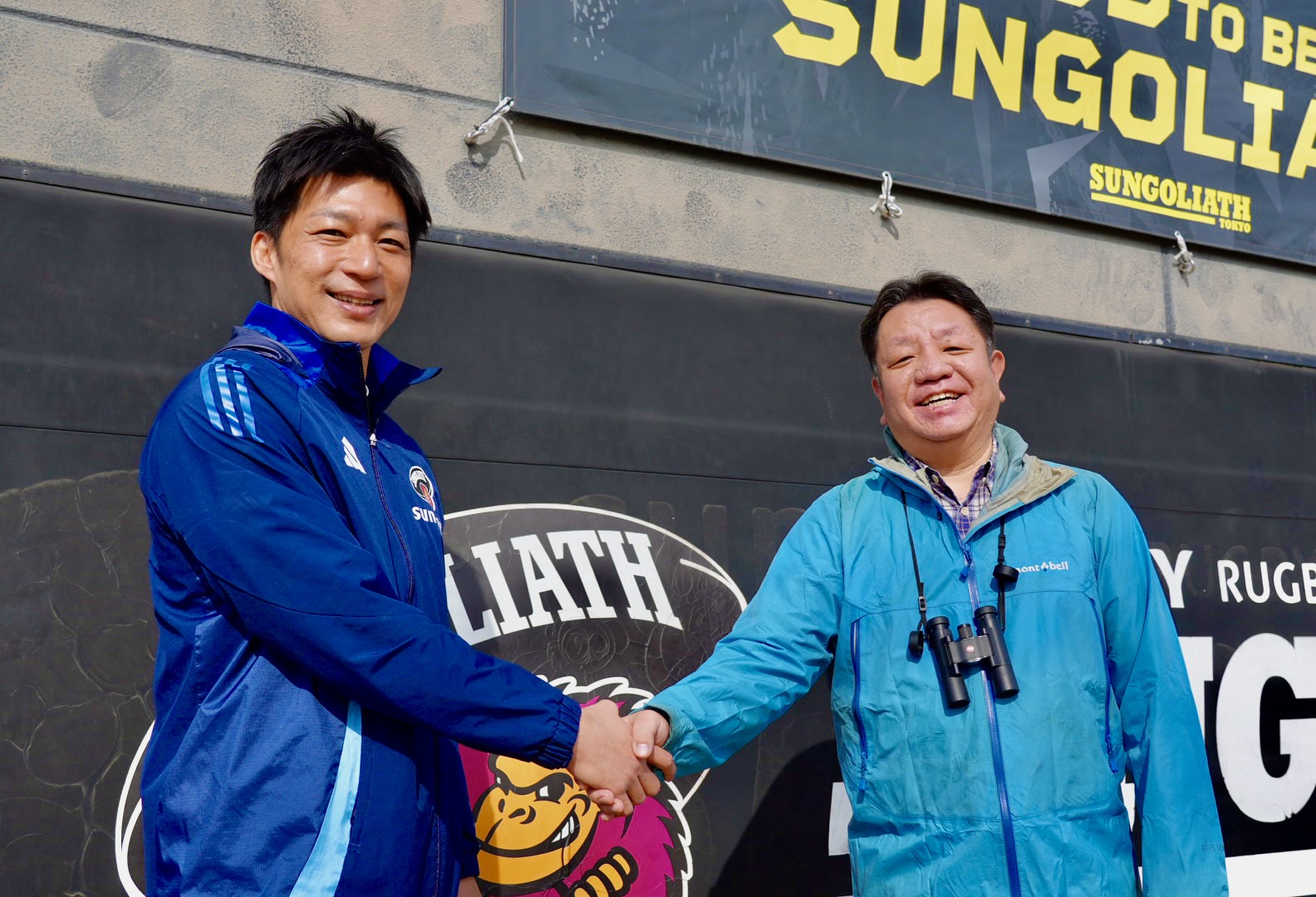
Ichida: I can't speak for everyone (laughs), but by all means, let's do it!
(Interview & Composition: Kazuyoshi Hariya)
[Photos: Aki Nagao, Mai Muramatsu]