Partner with Us
 Online shop


General
2025.06.20
The SPIRITS OF SUNTORY SPORTS series delves into the "thoughts" embedded in the activities of SUNTORY SPORTS and its future vision through long interviews from various perspectives.
The third installment is a cross-talk transcending team boundaries between Hiroki Nishida, Manager of SUNTORY SUNBIRDS OSAKA, and Takaaki Nakazuru, Assistant Manager and Recruit of TOKYO SUNTORY SUNGOLIATH.
Volleyball and rugby are the two team sports of SUNTORY. These two individuals retired from active play at almost the same timing from their respective teams and started their careers as staff members from this season. In SUNTORY, there are many "employee-athletes" who utilize their careers after retirement to become staff, and expectations for these two former top athletes are rising. Amidst their busy schedules supporting their teams, Manager Nishida of the SUNBIRDS and Assistant Manager/Recruit Nakazuru of the SUNGOLIATH met for the first time remotely and spoke about their dreams as staff members.
Hiroki Nishida
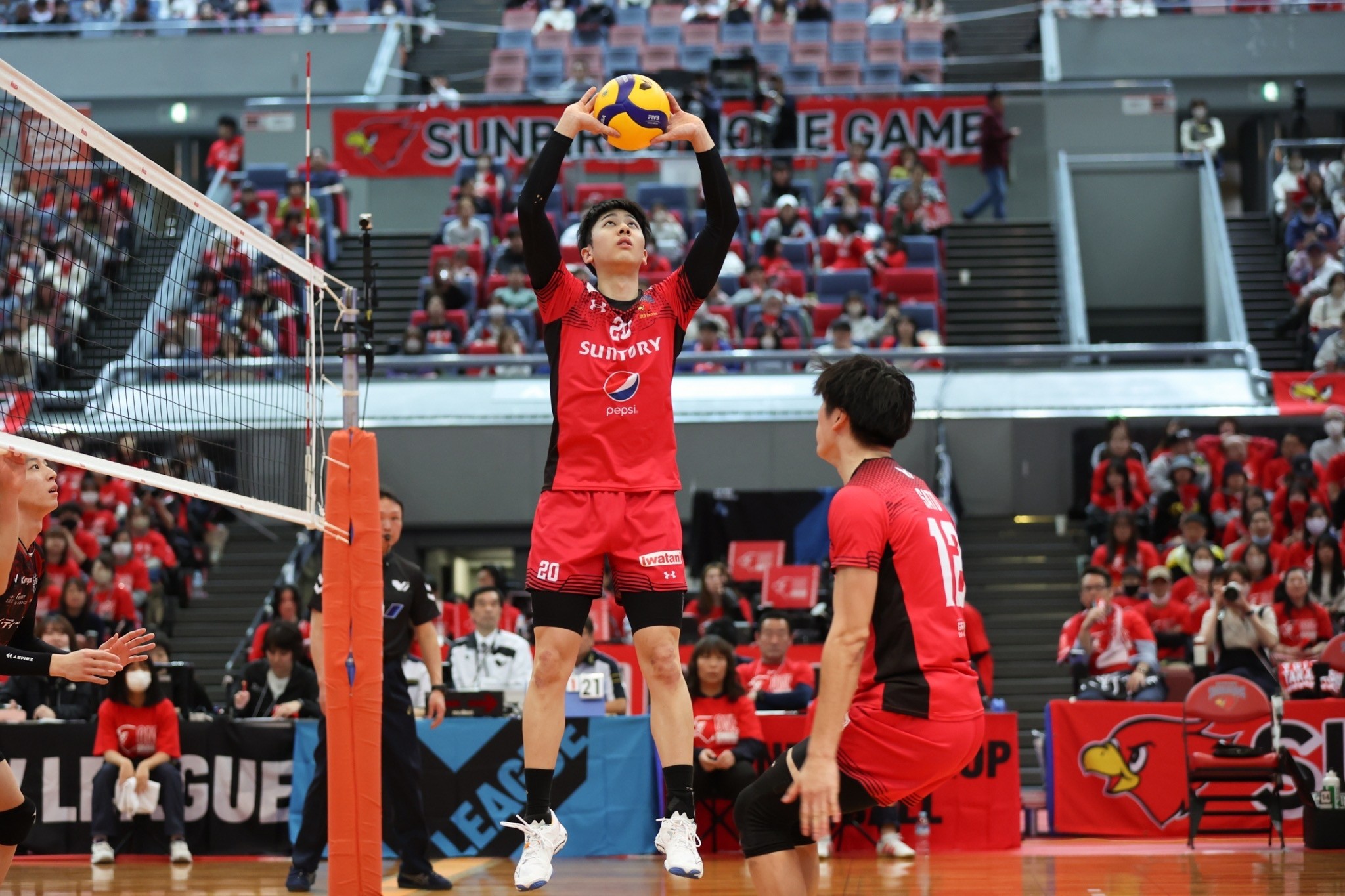
Born August 15, 1997. From early childhood, he became familiar with volleyball while picking up his older brother from the Tamana Junior Volleyball Club, and began the sport in his second year of elementary school. In his sixth year, he participated in the national tournament. In junior high school, he converted to a spiker and represented Kumamoto Prefecture in the prefectural competition. He entered Chinzei High School, a prestigious school in Kumamoto. In the "Spring High School Volleyball" tournament in his third year, he achieved second place nationally. Subsequently, he entered Hosei University. He played in the second division league for four years, but in the winter of his third year, he was scouted by GM Kurihara and joined SUNTORY in 2020. After joining, he supported the team as a second setter and relief server for five years. His favorite food is Yakiniku.
Takaaki Nakazuru
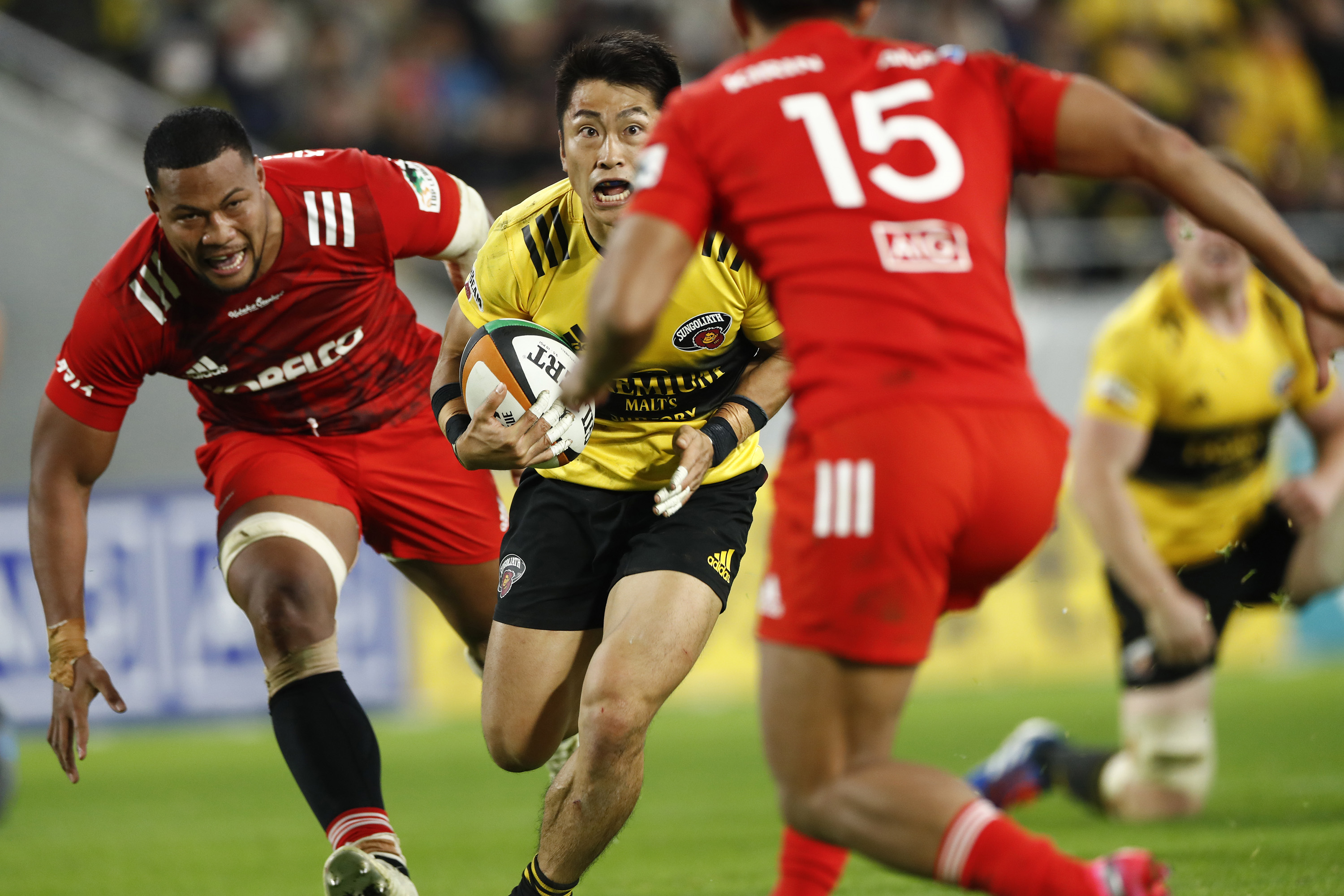
Born October 24, 1990, in Fukuoka City, Fukuoka Prefecture. He started rugby at the age of 10 at Genkai Junior Rugby Club. At Seinan Gakuin Junior High School, he established a rugby club and played while also belonging to a club team. Later, he played at Seinan Gakuin High School and Waseda University, joining SUNTORY in 2013. His position was Right Wing. He contributed to the consecutive Top League championships in the 2016-17 and 2017-18 seasons. He retired from active play after the 2024-25 season and currently serves as Assistant Manager and Recruit. He is the second son in a family of five, and his older brother also thrives as a League One player. His favorite food is Basashi (horse meat sashimi). His hobbies are fishing (First-class small vessel pilot license) and camping.
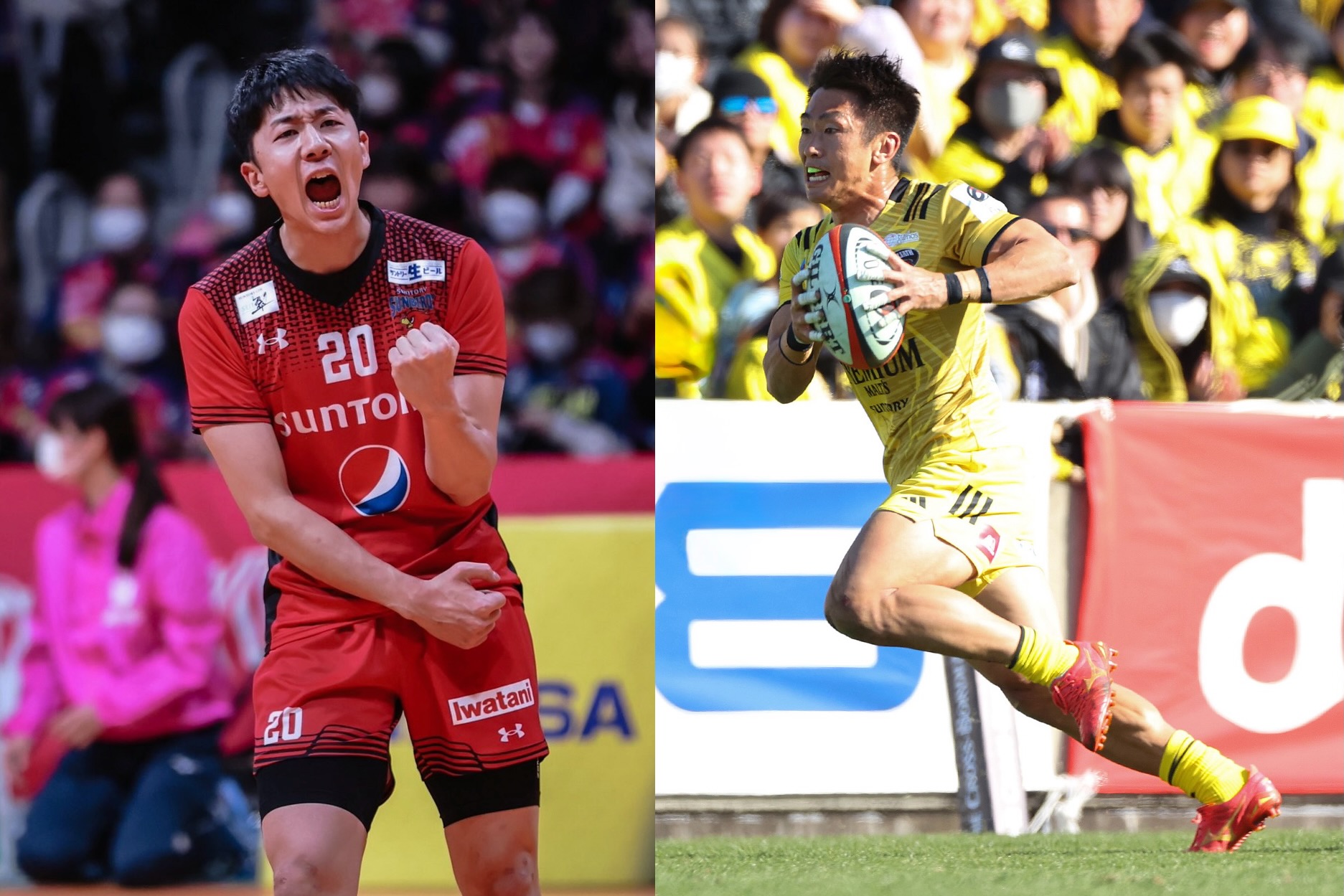
Setter x Wing
— It seems this is the first time for you two to meet.
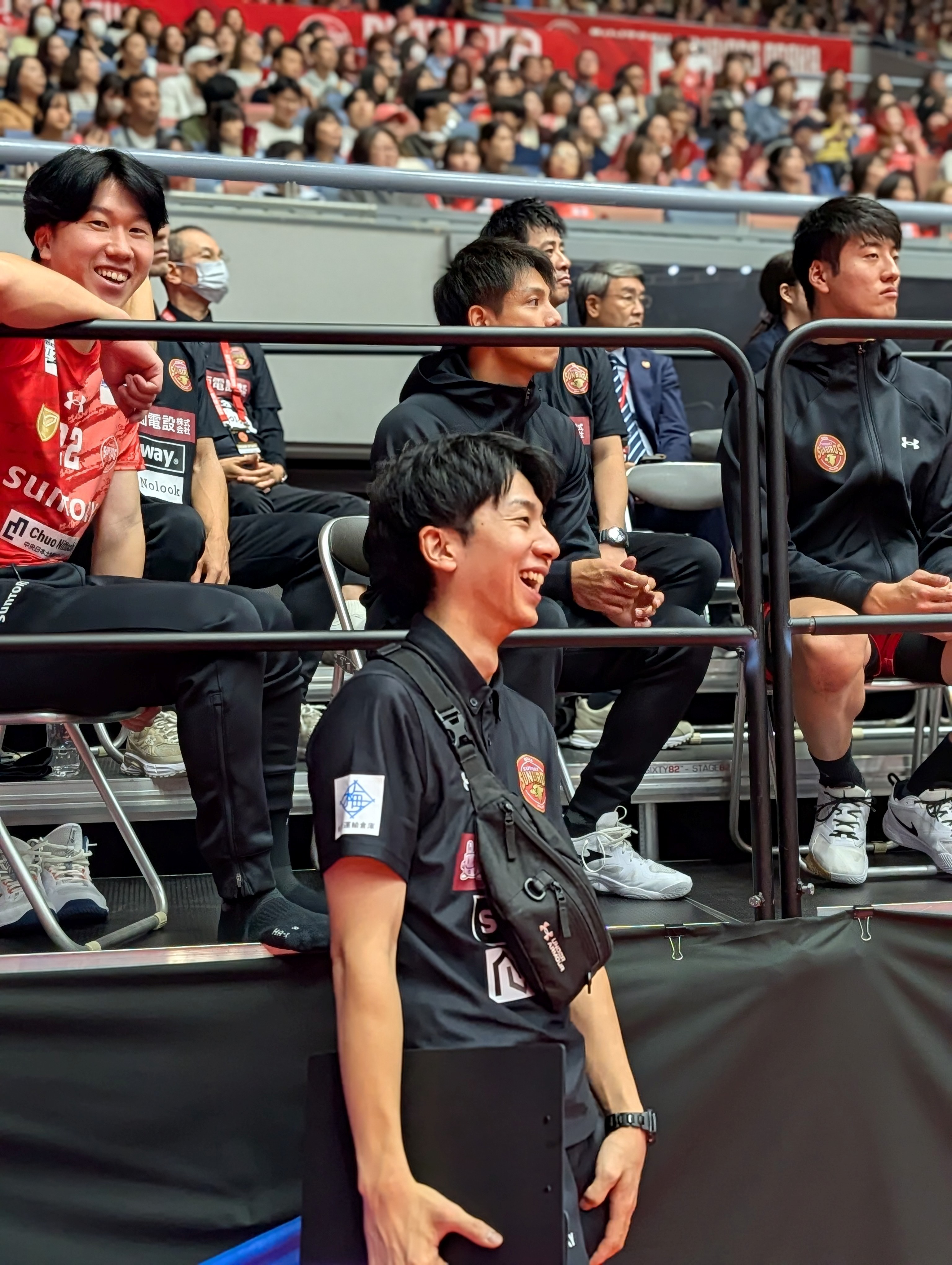
Nishida: Nice to meet you. I am Nishida, and I have been appointed as the team manager of SUNTORY SUNBIRDS OSAKA from June of this season. I look forward to working with you.
Nakazuru: Nice to meet you. I am Nakazuru. I retired from rugby in the 2024-25 season and have been in charge of assistant management and recruiting for TOKYO SUNTORY SUNGOLIATH since September. I look forward to working with you.
— Please tell us what kind of players you were respectively.
Nishida: As a player, my position was setter. Although I was rarely used as a starting member, I played as a "second setter." The first setter was (Masaki) Oya, who was with us until last season. When Oya was in poor form, injured, or when the team was not functioning well, I would enter the court and fulfill the role of correcting the team’s trajectory.
I also served as a pinch server and relief server, so I took the role of entering the court and energizing the team when they were in a difficult situation in the latter half. I was quite prone to nervousness, but precisely because of that, I would use positive self-talk such as "I can definitely do this" and enter the court with the determination of "I will do it."
Nakazuru: I did not have a cool role like Mr. Nishida. I played the position of a running wing. My job was to run and score tries. Nowadays, an increasing number of players can kick, pass, are tall, and can do anything. However, I could only play one position and was not good at passing or kicking at all. I was a wing who specialized in training only for running and competed solely with my strengths.
As a child, I was not very fast and my body was small, so I did not like rugby that much back then. Gradually, my height increased and my speed improved, and from that point, I began to like rugby. From there, I competed through running. It was around my third year of junior high when my height started to grow, though in the end, it only grew to about 177cm (laughs).
— Mr. Nishida is 180cm tall. When did your height increase?
Nishida: It was during the three years of junior high school. When I entered junior high, I was only 150cm, but I grew nearly 30cm during those three years. At that time, I felt like I wanted it to grow even more (laughs).
Yips
— You both flourished as top athletes in your respective fields. What is your greatest memory from your competitive careers?
Nishida: There was a time when Oya was selected for Japan national team activities, and with me being the only setter, we challenged the Kurowashiki All Japan Volleyball Championship. The Kurowashiki is held during Golden Week in May. About a month prior, the league season ended; we had won the league, Oya had taken the MVP and was selected as the best setter, achieving very brilliant results.
Under such circumstances, an opportunity suddenly came to me, who had not had many chances to play in the league, to perform at Kurowashiki, and I was in a situation where I had to do it alone. At the beginning of that season, I developed the "yips" and was in a mentally difficult situation where I could not even toss the ball as a setter.
— Was it your first time experiencing the yips?
Nishida: It was my first time. It was an extremely painful season due to the yips. After the season ended and we won the league, in a situation where only I was available for Kurowashiki, I was able to break through the yips and win the championship. That memory is very deeply impressionable. Because I could win amidst a great crisis, there was a true sense of accomplishment.
— Carrying all that responsibility, how did you manage your mental state?
Nishida: I wouldn't call it "giving up," but because it was such a difficult season with the yips, it was precisely because of the yips that I could adopt a "don't care" attitude. There is no productivity in thinking about negative things, so I performed a mindset shift to "simply see it through," and I was able to navigate it well.
— What was the reason for the yips?
Nishida: I believe I was unconsciously putting pressure on myself. Out of the feeling that "I must do well," I was in a state where I was applying unconscious bias to myself.
Non-member
— Mr. Nakazuru, did you have times like that?
Nakazuru: I think it is similar to when I entered "the zone." Until then, I was the type to put a lot of pressure on myself, but in an important match, I adopted the mindset of "I have no choice but to enjoy it," and I was able to play very well. That match became a turning point for me. I thought that experience was very similar to his.
I watched a documentary of a famous fighter named Conor McGregor, and the way he looked happy on the day of the match was very impressionable. I thought, "I am doing rugby because I love it, so I might as well enjoy the match day." That match was after the World Cup with a full capacity crowd, and I was able to make many good plays.
— Mr. Nishida, did you adjust your feelings by yourself?
Nishida: Yes. I was performing mental training. Triggered by the yips, I started mental training, practiced positive thinking, and learned from neuroscience about the original mindset—what kind of signals to the brain lead to negative emotions.
— Is it that you weren't originally positive, but there was a moment you changed?
Nishida: I am not originally of such a positive personality. Because the part I lacked was the mental aspect, I felt that mental training was necessary.
Nakazuru: I am not negative, but regarding preparation for rugby, I tend to want to do this and that. My greatest memory is the match where we won the first championship after I joined the SUNGOLIATH. Even before I joined, they had won consecutive titles, so I thought I would experience a championship if I was in the team. However, I could not experience a win until that time in my fourth year. Not only because we won that year, but also because I had a real sense of contributing to the team, it remains very impressionable.
— You played and flourished in the match that decided the championship, didn't you?
Nakazuru: That's right. I was a "non-member" during the opening match of that season, and when the season started, I never imagined it would end that way. Even when I had a meeting with the director, I was told, "You are the 4th choice among players in the same position, so I won't put you in matches," and I thought, "I definitely won't be able to play this season" (laughs). For wings, only up to the 2nd choice can play, and since I cannot play two or three positions like other players, there is no merit in putting me in the reserve members.
— Overcoming that, you became the try king and also earned the season MVP.
Nakazuru: Yes. It was thanks to the team, but looking back, the results were too good to be true.
A Part of Life
— I believe you both have a very serious approach to your sports, but how do you perceive the sport itself?
Nishida: It truly is a part of my life. Since I have been doing volleyball since I was little, I have been truly helped by the people I met through volleyball. I believe there will be various connections in the future, and as for my approach to volleyball—since I truly love volleyball—I want to continue loving it.
— Did you ever think about trying rugby?
Nishida: No, not at all (laughs).
— How about you, Mr. Nakazuru?
Nakazuru: It is exactly the same. It is a part of my life. I did it because I truly loved it, and thanks to that, my path widened, I became involved in work, and I could meet various people. It is truly a part of life.
— Did you ever think about trying volleyball?
Nakazuru: Y-yes (laughs).
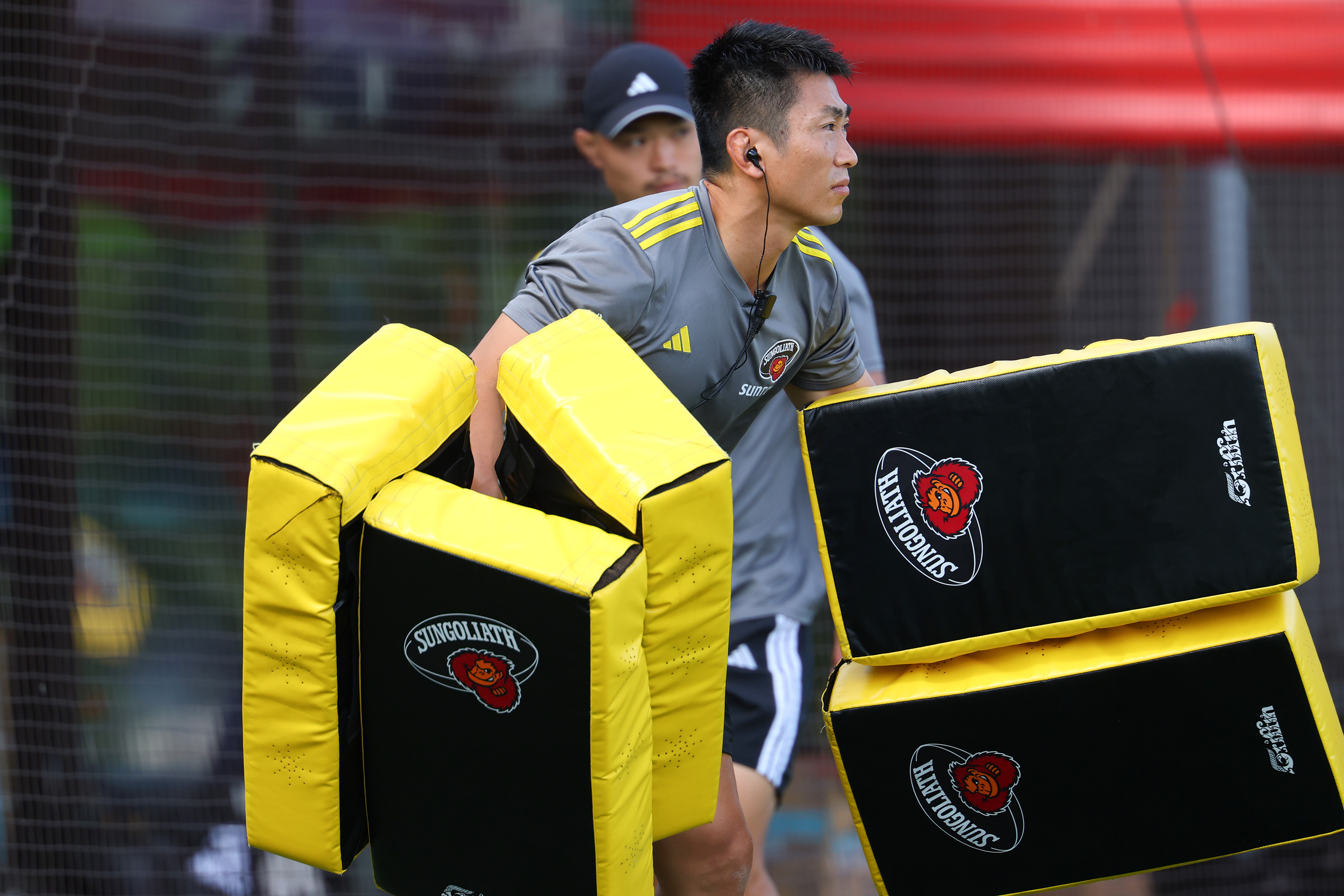
— Hundreds of players have belonged to the SUNBIRDS and SUNGOLIATH in the past. Among them, I suspect those who support the team as a job after retirement are chosen for their seriousness. What kind of things are you mainly doing currently?
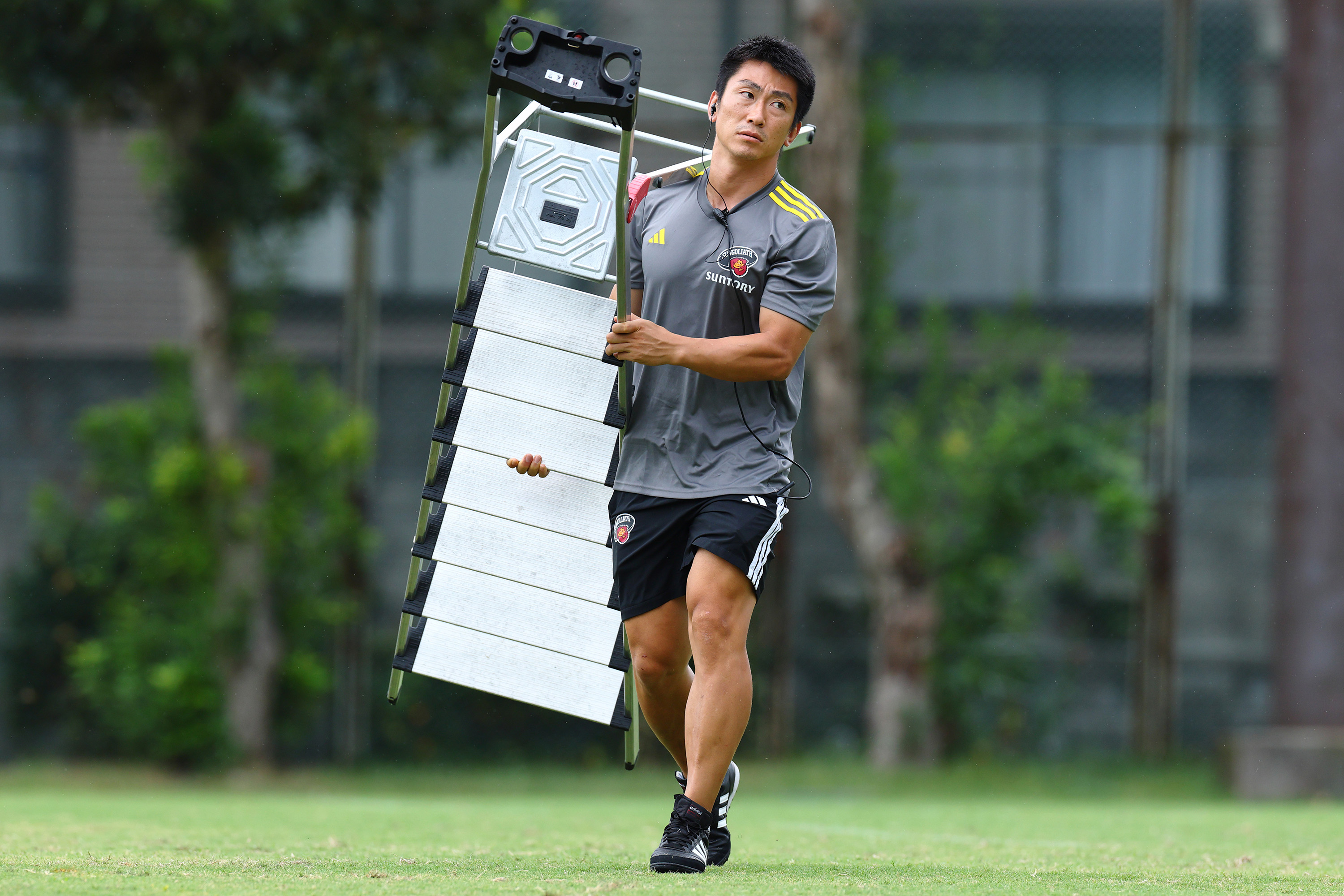
Nishida: Primarily, I am focusing on creating an environment so that players and the team can engage in volleyball more comfortably. Additionally, I am in charge of a wide range of tasks such as accounting work, purchasing necessary equipment for the team, and arranging accommodations and transportation for away games.
— As a former player, what kind of environment is a "good environment" for a player?
Nishida: For players to engage in volleyball with all their might, creating an environment that minimizes stress other than playing is indispensable. It is important that equipment necessary for practice and matches is always prepared, that schedules and transportation proceed smoothly, and that a system is in place to respond quickly to any unexpected troubles. By ensuring these "obvious" things are strictly maintained, players can concentrate on the competition with peace of mind, leading to the maximization of performance.
— Mr. Nakazuru, you are in charge of assistant management and recruiting. How about you?
Nakazuru: Currently, I am operating mainly on recruitment. Daily, I go to practices at various universities and communicate with the directors and players of those teams. In the process, if there is a player I wish to scout, I arrange for them to visit the SUNGOLIATH facilities or participate in practice. And on weekends, since the university season has started, I watch university matches on Saturdays and Sundays—to the extent that I wonder how many matches I should watch—and in between those times, I perform the work of an assistant manager. I support the team when I am not at a university.
— Do you decide on players you want to scout by watching matches? Or by watching practices?
Nakazuru: I suppose it is matches first, after all. I go to matches or practices and hear things from directors like "This player is good." From there, I follow them with attention during matches to see if they are a player that fits the SUNGOLIATH team style. Also, through talking to them, I look at their personality and, since in the case of SUNGOLIATH employee-athletes are the main focus, whether they are a player who seems capable of performing company duties as well.
[To be continued]
(Interview & Composition: Kazuyoshi Hariya)