Partner with Us
 Online shop


General
2025.06.20
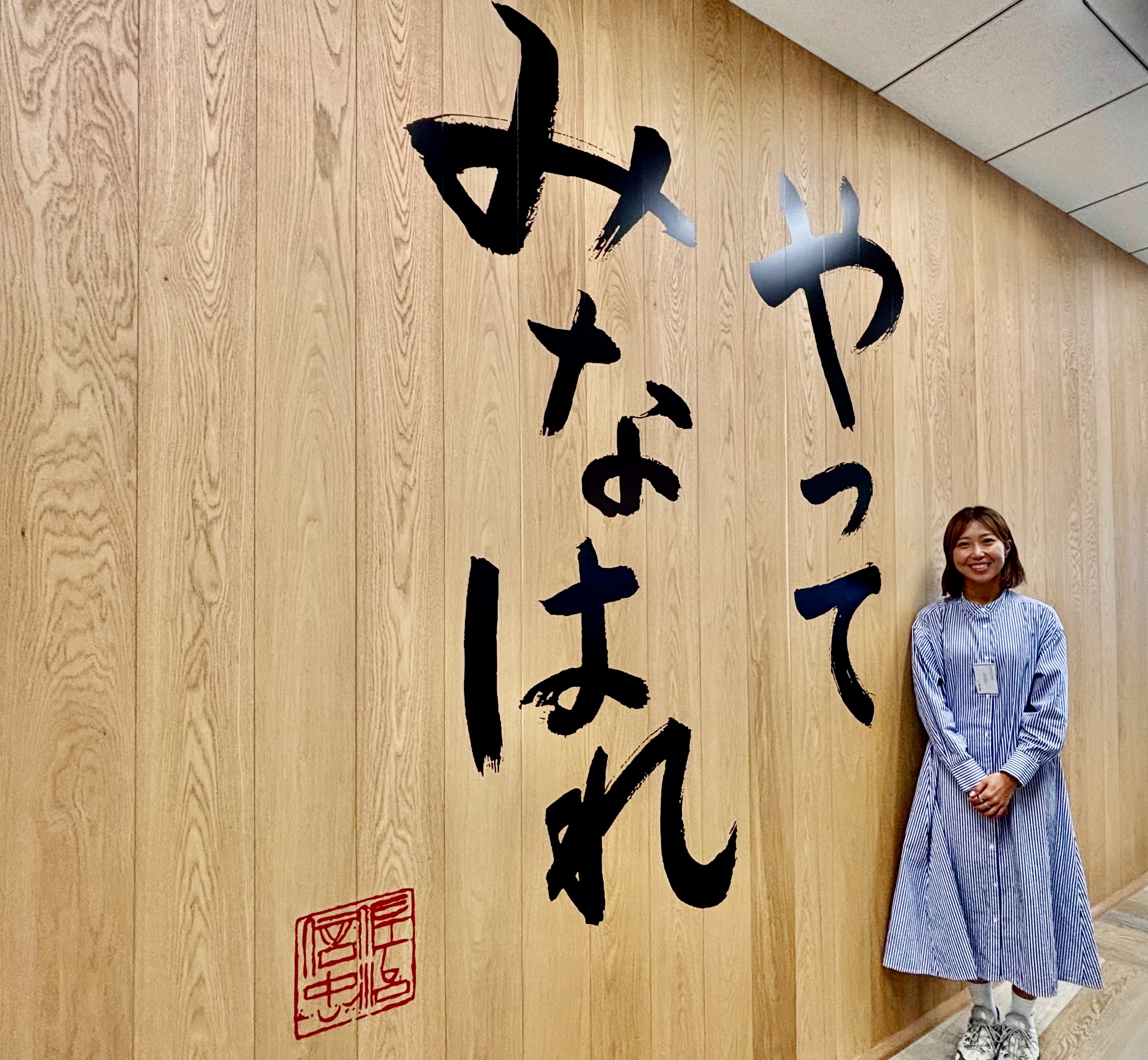
The
Second installment, SKIMO: This is the latter half of the long interview with Ayaka Ueda.
(the first half is
here:<SPIRITS OF SUNTORY SPORTS>Vol.2, "I Love the Mountains, I Love Nature, I Want to Stay in the Mountains Forever" - First harf
)
What is the Suntory Spirit that Ueda talks about?
How to Make It Happen
―What do you feel you gained from Suntory, which you feel is a really good company?
Ueda: I think there are many things, but I think the most important is the attitude of taking on challenges. Of course, thinking "What if I fail?" is not zero, but rather than thinking about reasons to quit, thinking positively about how to make it happen is, I think, the thing I learned the most.
―Didn't you already have that quality?
Ueda: I don't think so. I think when I was a student, I wasn't really successful in sports, and I was the type to miss chances at important moments. So, now I'm on the positive side, but before joining Suntory, I think I was more negative. Even at Suntory, I made mistakes. For example, when I was in sales, I created a plan for shelf arrangement on the screen, but when it was actually implemented in stores, one product was higher than the registered height and didn't fit on the shelf—it happened in almost all stores. When this was discovered, I immediately said to my boss, "I'm sorry, this happened. I will try to recover like this, is that okay?" and they said, "Then let's split the work and handle it together."
Ah, so they will go do that? I thought I would be scolded, but I learned at Suntory that "Oh, there is also such an option." Also, since many people at Suntory have high communication skills, just being at Suntory, I naturally felt my communication skills improved.
―How do you feel about still being supported even after leaving Suntory?
Ueda: I feel very happy. Because leaving Suntory was a difficult choice, I love all the people at Suntory, and I thought it would be lonely if the relationship ended after leaving. That they support me even after leaving—of course, financial support is nice, but more than that, the feeling that the people I love from Suntory are cheering me on is now really nourishing for me.
―How is the career in PR department for you now?
Ueda: On the contrary, becoming the one being interviewed, I realized "Ah, I should have paid attention to this part" (laughs). At that time, I did it up to here, but I also feel there were things I could have done to make the interview go more pleasantly. On the other hand, I also understand the feelings of the journalists—like "I guess they want to do this" or "Probably better to provide words that make the title catchy," and I tend to think about that too (laughs).
―That also helps yourself, right?
Ueda: It does, it does. For example, I didn't understand the difference between tie-up articles and editorial articles until I joined the PR department, but now, knowing that, when I am interviewed, I can tell which parts can be corrected and which parts are difficult, so talking with reporters and media people becomes easier.
You Can Challenge Yourself Anytime
―Do you think your experience in sales and PR helps, since you need to promote yourself and gain sponsors?
Ueda: I think it helps tremendously. Not only in results, but I think about "What is my unique appeal?" and try to communicate that well. The sponsors who support me now are not just cheering for my results—they empathize with my spirit of challenge and support me for that, so I am very grateful.
―How do you think about your own appeal?
Ueda: Many athletes aiming for the Olympics, or who have competed in the Olympics, have been doing that sport since they were very young, and I think that is amazing. But when I was a child, I looked at those athletes as if they were people from a completely different world. Yet I thought, "Maybe I can offer a different kind of insight." I lived as a regular company employee while continuing my sport as much as possible, but at 29, I chose the path of being an athlete. Even now, people ask, "Why did you leave Suntory?"—I pursued what I wanted so much that I left such a great company. I think my experience shows that "You can challenge yourself anytime,"" and that "If you do what you can, create the environment, and build the best, you can achieve your goals." I see that as a strength. I believe I have many "drawers" of experience—I haven't only done sports, I haven't only worked, I have experienced setbacks, and I think I have a perspective that allows me to see things from many directions.
―Now you belong to a company in Gunma Prefecture, right?
Ueda: Yes, I belong to the Chuo College Group, a company that operates vocational schools and technical high schools.
―What kind of work do you do there?
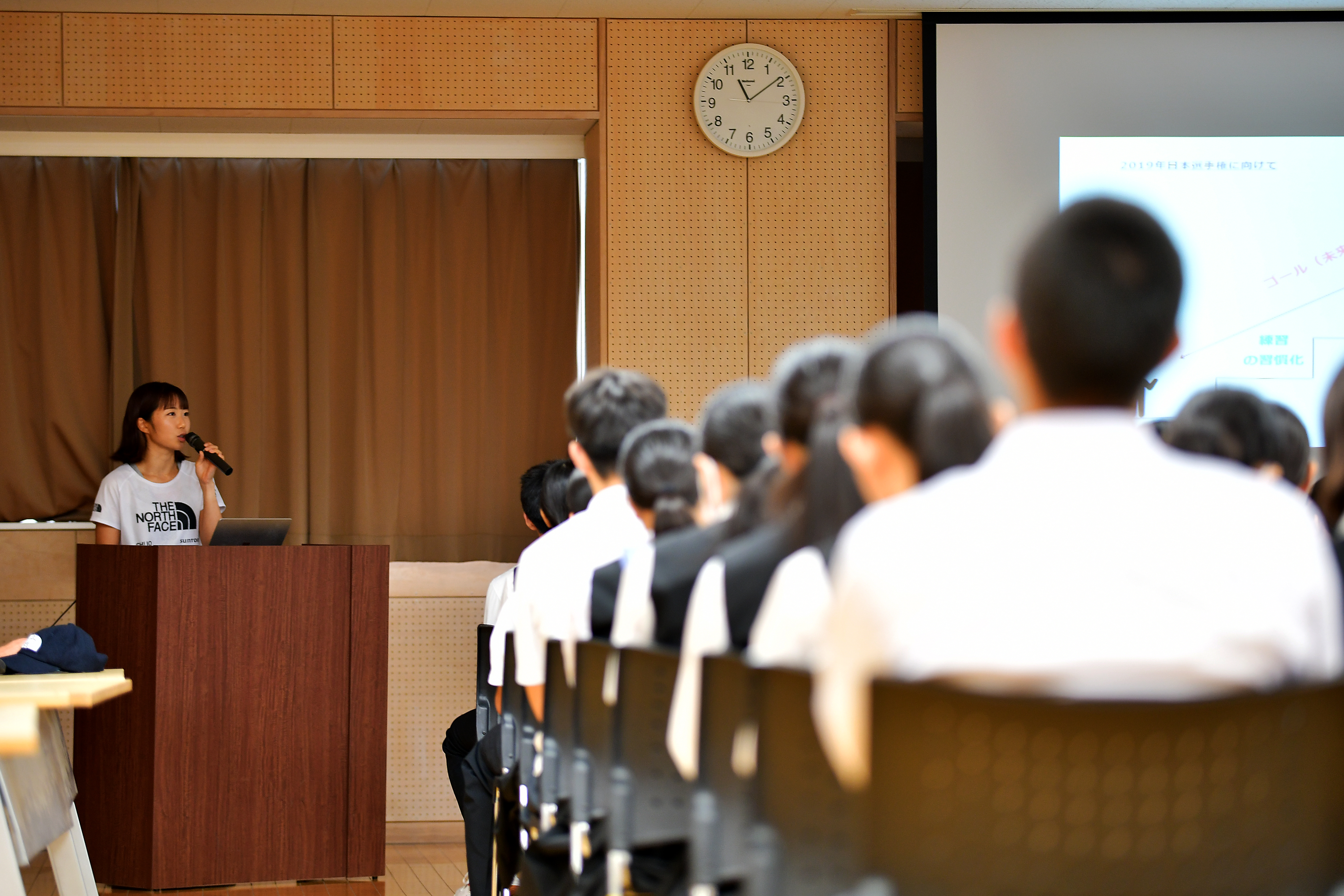
Ueda: I am in the PR department. In the first year after joining, I practiced in the morning and went to work in the afternoon. Since last summer, I consulted with the director and asked, "I want to train as much as possible," and now my main focus is training, while also handling interviews and opportunities to speak at high schools and vocational schools.
―Do you speak as part of a class?
Ueda: Yes. I get a class period and talk about what I have experienced, what I feel because of my experiences, how I structure and pursue goals when I set them, and similar topics.
―Is teaching interesting?
Ueda: I'm not good at speaking in front of people, and while talking, I often worry, "Am I getting my message across?" But some schools collect feedback essays. In those essays, students write what they felt, like "I will try to do this from tomorrow" or "I was very hesitant about running for class representative, but I decided to do it." Seeing that I could be a trigger for someone to take a step forward makes me extremely happy.
Always Can Be With the Mountains
―Now, about the Olympics, you haven't qualified yet, right?
Ueda: Yes. The first World Cup race of this season in December will be the final qualifying for the Olympics.
―So you absolutely have to win there?
Ueda: Yes. It depends on the rankings of others, but we have to rank higher than rival countries. Because it is a newly adopted event, there are only 18 slots for men and 18 for women worldwide. So, every country is fighting a very strict national quota competition.
―How confident are you?
Ueda: For Japan to get a quota, we need to get a very good result in the next competition. The selection criteria are very complicated. Currently, in the relay ranking, Japan is 15th, but we need to rise into the top 10, otherwise it will be difficult. It's quite a big challenge, so we need the Japanese team to run perfectly without mistakes and then wait for the chance to come.
―If it doesn't work out, what about five years from now?
Ueda: I still want to aim for it. However, designing one's life is a difficult problem, especially for women. No matter what turning point comes, I want to "come back as an athlete once more." That won't change.
―Are there athletes like that?
Ueda: There are many overseas. This is a sport with a very long athlete life. Looking at the entire sports world in Japan, I also want to challenge this to break new ground. I think that is one way of "Yatte Minahare" There are many athletes overseas, but it has not been realized much in Japan, so I want to show, "It can be done this way," in my own way.
―Even without the Olympics, will mountains be a lifelong thing?
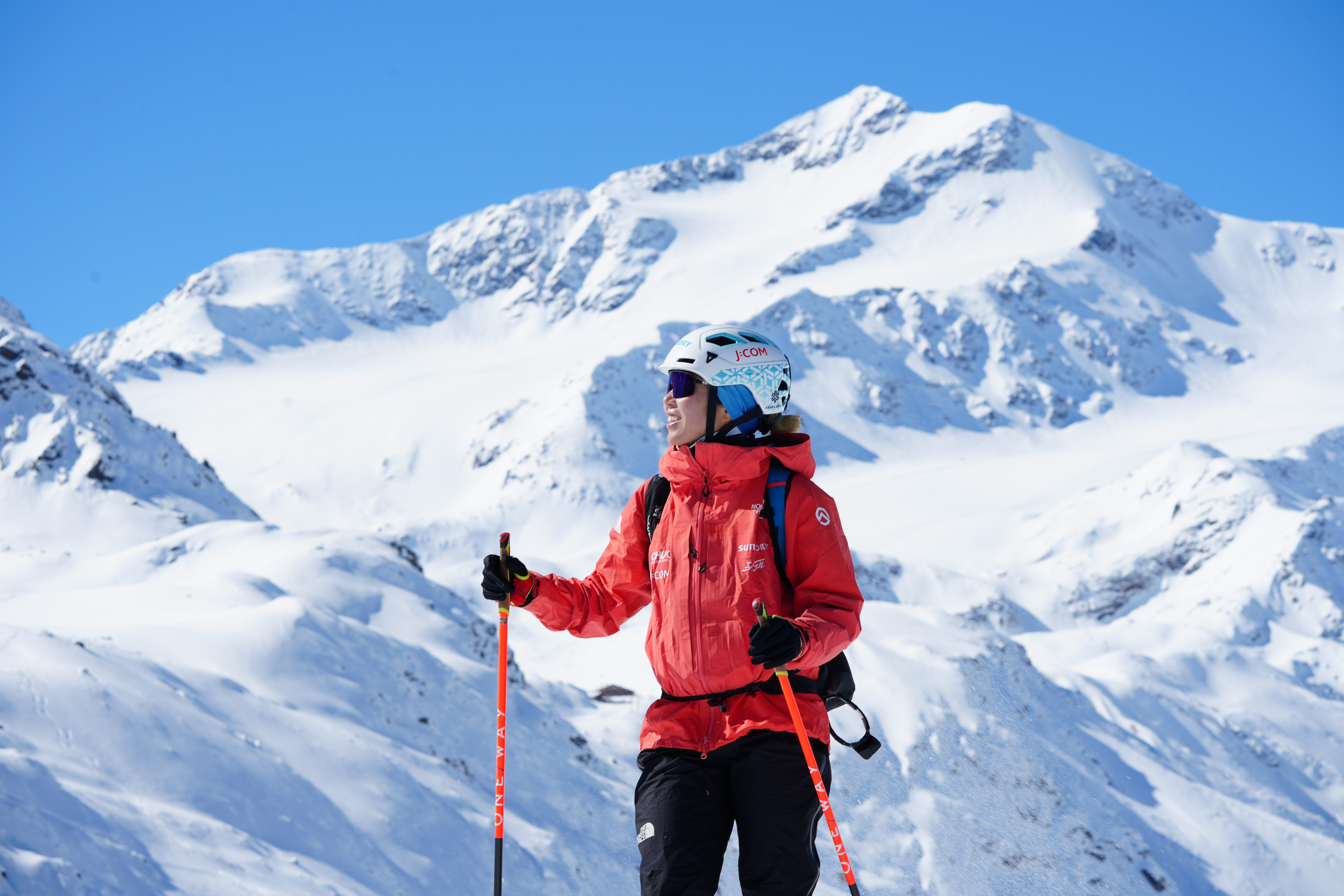
Ueda: I think so. If I can't run in the mountains, I can walk. If I can't climb high mountains, I can climb low mountains. By changing the way I engage, I can always be with the mountains-ultimately, I think until the day I die, I will always be with the mountains (laughs). I would be happy if I could climb a mountain on the morning of the day I die.
Pleasant Pressure and Gratitude
-Your future with Suntory?
Ueda: I felt this even when I was at Suntory, but even after leaving, I truly think, "This is such a good company." I don't regret doing ski mountaineering, but especially after leaving, I feel that more. Everyone is good, and if I communicate one thing, they understand ten. Many even say things like, "How about this? How about that?"-I really never had troubles with human relations. I think everyone around me was just good people.
I'm glad that such a company continues to support me. Because Suntory supports me, employees still message me on LINE or say "We're cheering for you" on Instagram after my races. I continue to communicate with everyone, and in the year I left, my colleagues and seniors took the initiative to call employees I had connections with, saying, "Ueda-san is leaving, but let's support her," and they collected voluntary contributions, independent of the company.
Initially, this was before I joined my current affiliation, and that funding really helped me. I am truly grateful to so many people, and I think the Suntory people who, despite having a lot of work, decide to take on this extra effort, are wonderful.
I felt very humbled to receive so much of people's valuable time and funds, but they said things like, "Absolutely don't feel pressured. We just want to do this," or even added, "It might be pressure, but don't feel it," which turned into a comfortable sense of pressure and gratitude. I was really thankful.
What Makes Me Different
-At overseas races, I hear that the tops of mountains are packed with cheering people?
Ueda: It's like a flower path thousands of meters up. People around the Alps are passionate, and there's a culture of cheering as a sport, so I hope that can be inherited in Japan as well. Personally, Suntory also focuses on environmental protection, so I often think, "Is there something I can do for Suntory in return?" For example, mountain conservation activities, something we could do together, would be nice.
-As a future direction, maybe you're suited to be a leader?
Ueda: I think my previous supervisors would say, "Ueda isn't a leader" (laughs). I'm more the type who quietly does things at the lower level (laughs). Now, I do things myself, but that doesn't mean I am the leader. People around me support me properly (laughs), and recently we call it "Athlete-Centered" rather than "Athlete-First," with managers, physical coaches, nutritionists around the athlete. I communicate what I want to do, and then they say, "We can do this here, then we'll do it," so I don't feel like I'm the leader at all.
-But you are one of the leaders in ski mountaineering, right?
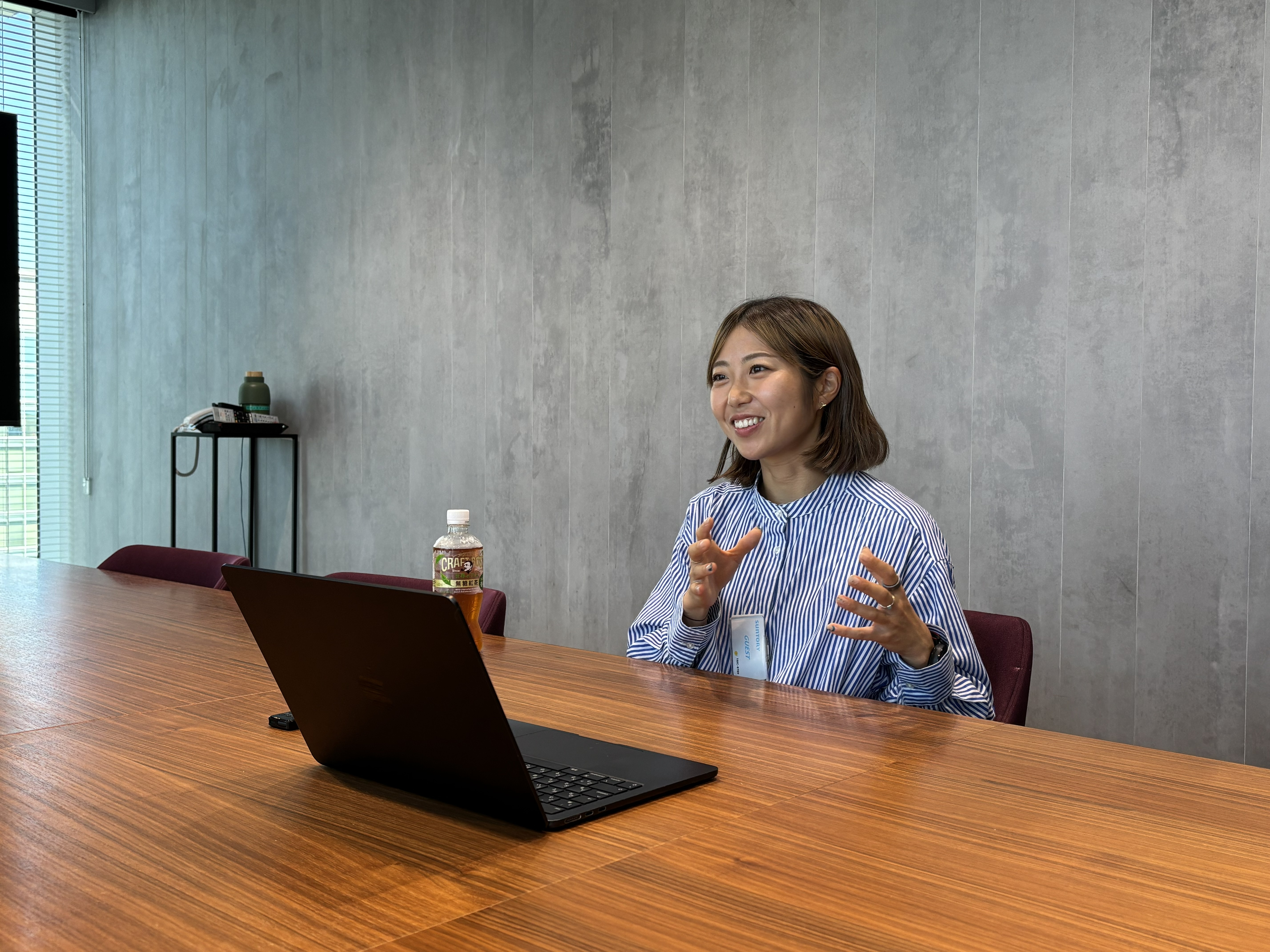
Ueda: In my mind, my big priorities are repaying the companies that sponsor me by giving results, and making sure I give good results. So when being interviewed, I try to say things that make articles catchy, and show the parts that are "different from others." Being on the receiving side of interviews, I see the reactions of reporters and realize, "I thought this was normal, but that's interesting," and I think I've learned this through trial and error.
A Realistic "Do Your Best"
―What impression do you have of other sports at Suntory?
Ueda: I was mostly involved with the rugby team, the Sungoliath. Shinya Makabe and Dai Nagare were in the same department, and shortly after I joined, I was in charge of the same company as Shintaro Ishihara, and later I paired with Hikaru Tamura (now URAYASU D-Rocks). At that time, I wasn't very familiar with rugby, but because my seniors and peers were playing, I went to watch a few games. Watching in person, of course, everyone is physically so strong. I asked Hikaru, "Aren't you scared? Such big players are coming at you," and he said, "Yes, I'm scared," and I thought, "Ah, they're humans too" (laughs). Because of that involvement, my image of the rugby team is that they're strong and cool in games, but all very kind and good people (laughs).
―What impression do you have of SUNBIRDS?
Volleyball is based in Osaka, so I didn't have the timing to go see the tournaments, but Fujinaka-kun (Kenya / currently JTEKT STINGS AICHI) is my batchmate. Suntory takes up "Yatte Minahare" from various angles, and I think one of them is sports. It may become an inside perspective, but on the other hand, now that I'm outside, I feel that the relationship between employees and athletes at Sungoliath and Sunbirds was very close. In the case of Suntory, when I was there, the distance was very close, and when we met at the company, we could cheer like "Do your best!" and I felt that it created a good cycle. When you are at Suntory, you only understand Suntory, so it became a normal feeling, but including myself, the athletes' efforts properly connect to the other employees' feelings like "Well, maybe I'll give it a try," and also, it's not a distant “do your best” from the company, but a real-feel "do your best" that you get, so the athletes can do their best again. I thought after going outside that this cycle is beautifully formed.
―So there's no wall for the sports you chose?
Ueda: In the year I left Suntory, I went on an overseas training trip alone, climbing a glacier in Austria. By chance, the Austrian team was training there. They didn't know me at all, but I said, "I came alone from Japan. Can I join your training?" and directly negotiated with the Austrian coach, and he said, "Sure." At first, I couldn't keep up, but taking that step and training together allowed me to feel what I could achieve and notice "this part is lacking." Austria is a strong team that even reaches the podium, so at first I felt they weren't very receptive, but because I tried my hardest to keep up, they started paying attention, asking "Are you okay?"
―That boldness, that stepping forward, only came from leaving Suntory, right?
Ueda: Leaving Suntory was really significant. Leaving such a good company gave me a great opportunity to push through. Also, in sales at Suntory, there's the "Just go show your face" approach. Trying once with a "why not" attitude is something I learned at Suntory.
―Thank you very much for your time today. We'll continue to support you, not only for the Olympic final qualifiers but also for all your activities.
Ueda: Thank you very much!
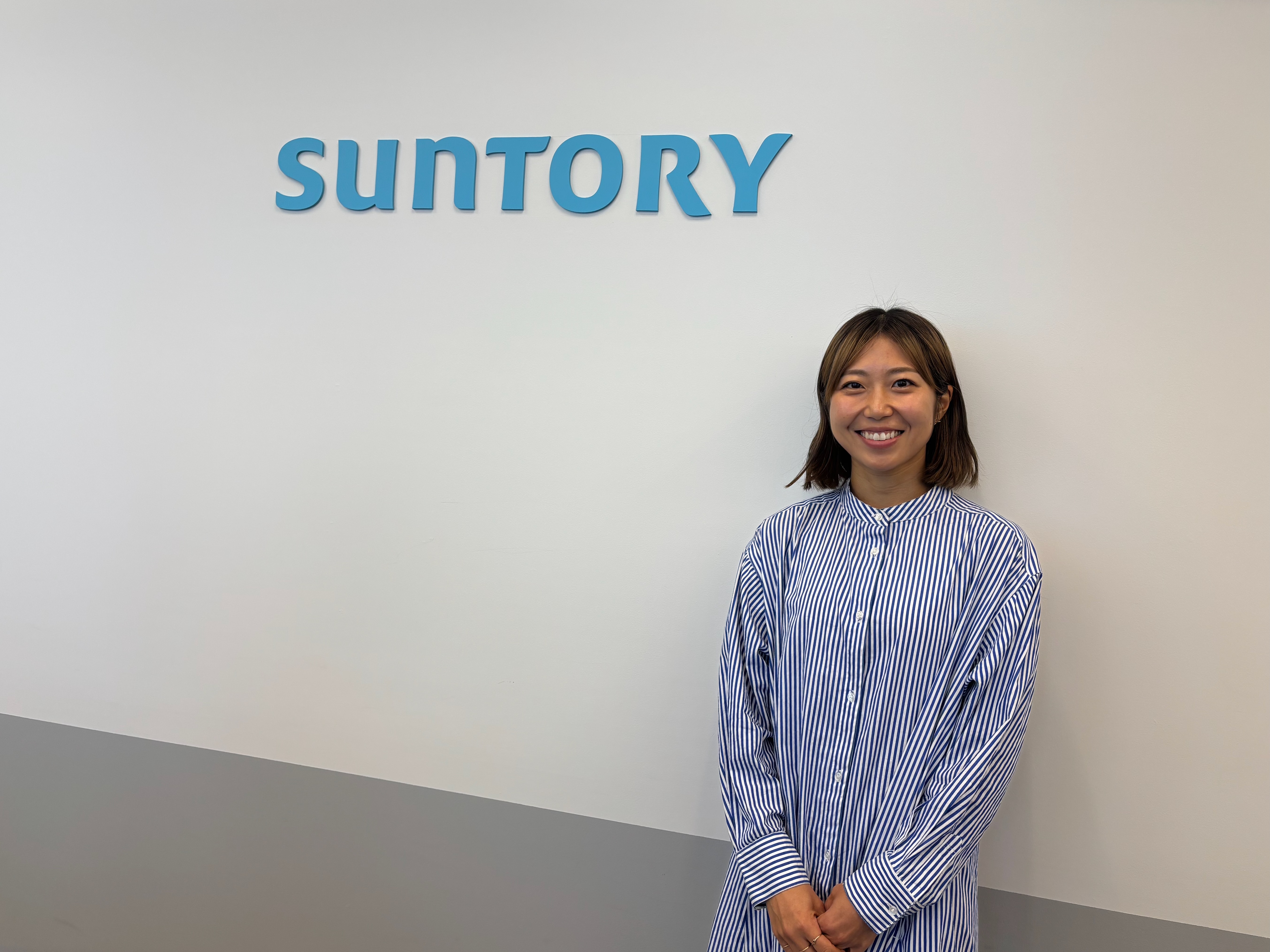
(Interview & Composition: Kazuyoshi Hariya)
Suntory is involved not only in team sports and tournament management but also in supporting individual athletes. We continue to cheer for Ueda's ongoing success!