Partner with Us
 Online shop


General
2025.06.20
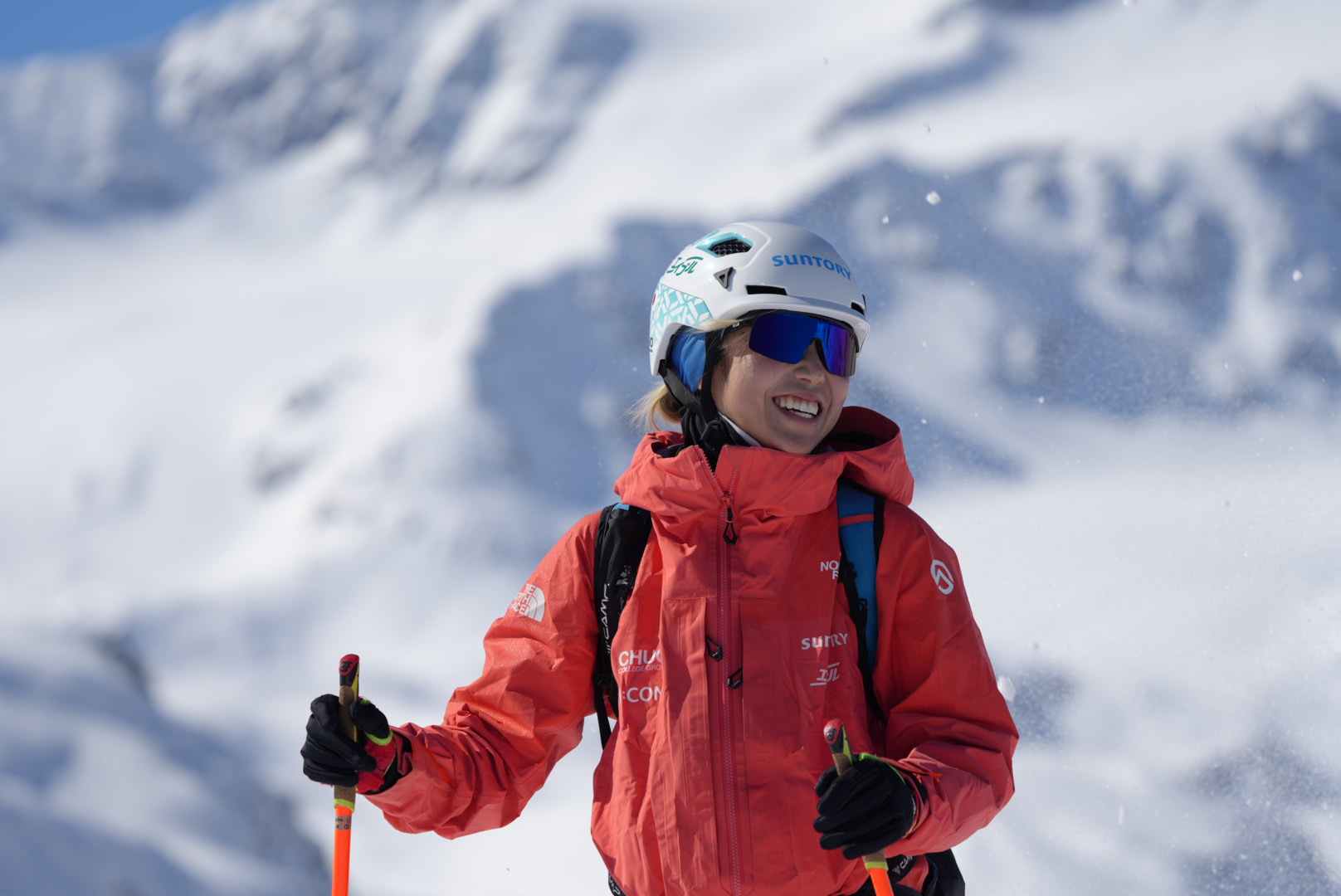
The SPIRITS OF SUNTORY SPORTS series explores, in long-form interview style, the "passion" that lives within SUNTORY SPORTS and the vision for its future from various perspectives.
For the second installment, we bring you a pre–Olympic final qualifying interview with SKIMO athlete Ayaka Ueda, who was featured in the article linked here:
Pioneering the Future of Sports Together, Athletes Who Continue to Take on Challenges with SUNTORY
While working at Suntory, Ueda was already involved in mountain sports. Leaving Suntory to embody the spirit of "Yatte Minahare" she is now taking on new challenges in an emerging sport.
【Ayaka Ueda】
Born in 1993 in Osaka Prefecture. SKIMO (Ski Mountaineering) Olympic Strengthened Athlete. Member of the Chuo College Group.
Joined Suntory Holdings Limited as a new graduate in 2016, and worked at Suntory for approximately seven years until leaving the company in January 2023 to pursue further growth as an athlete.
During her time as a Suntory employee, she encountered sky running and ski mountaineering. After placing 3rd in the 2018 Skyrunning Asian Championships, she began competing in sky running in full earnest.
Currently, while continuing sky running, she is focusing mainly on SKIMO with the aim of competing in the 2026 Milano-Cortina d'Ampezzo Olympic Games.
What Does the "Mo" in SKIMO Stand For? … Mountaineering
―― When I first heard the name "SKIMO," I felt it sounded cute and familiar as a sport. What did you think when you first heard it?
Ueda: I also do sports like sky running and trail running, where you run in the mountains during summer. I actually started SKIMO as training to become stronger in those summer disciplines. I did think the name sounded friendly, but more than that, I was like, "What is the 'mo' at the end supposed to mean?" (laughs). People know "ski," but what mo is that? I was told that since mountaineering in English is "Mountaineering," they took the initials "MO", and then I was like, "Ah, so it's ski-mountaineering… but just from the name alone, you can't really tell, can you?" (laughs)
―― When you actually do it, does it feel like ski mountaineering?
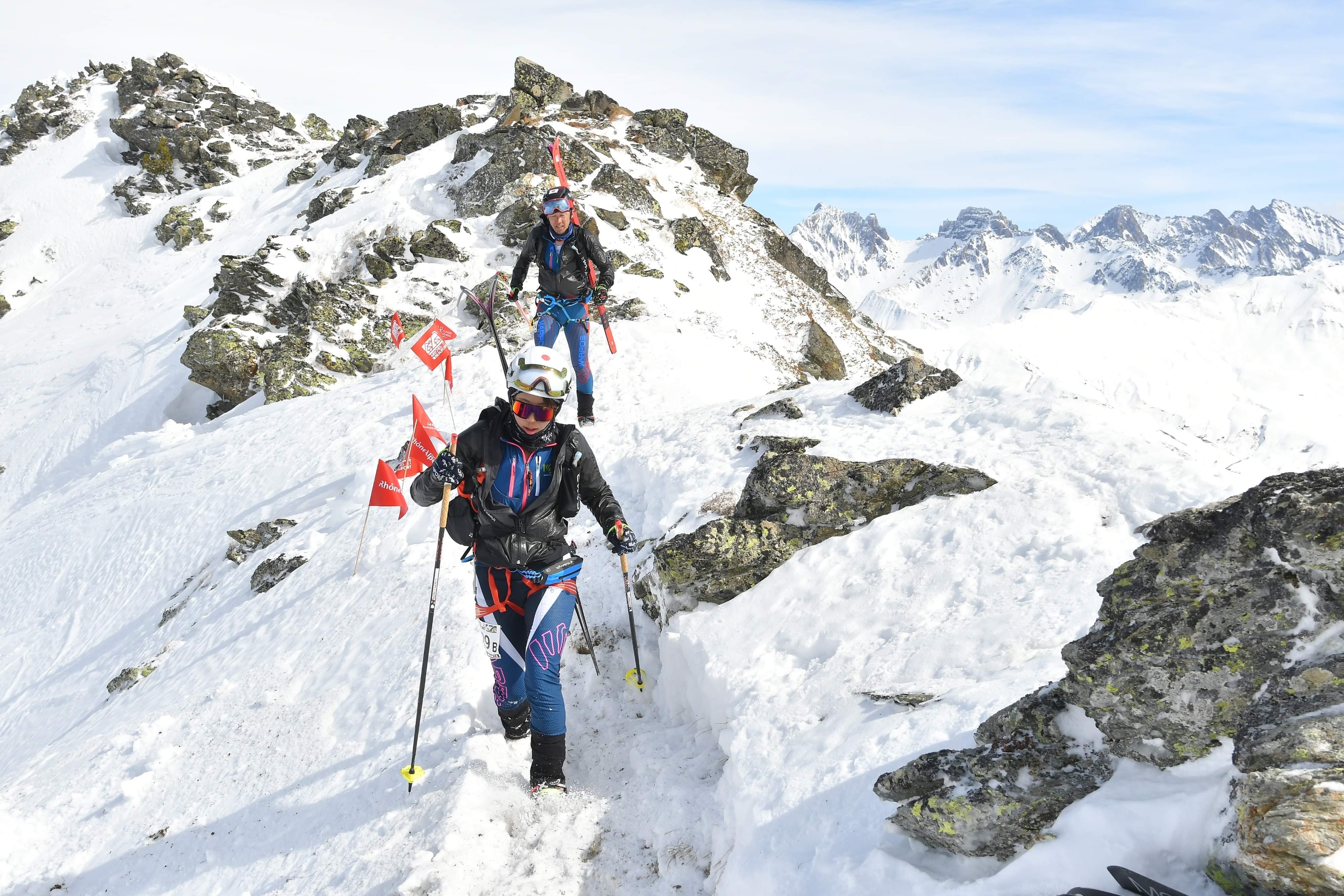
Ueda: Yes, it does. The sprint event that became an Olympic discipline doesn't clearly show the mountaineering elements just by watching. But the classic races, which are the origin of SKIMO, definitely feel like ski mountaineering. For example, in a race I entered last year, we used anzairen (tying climbers together with a rope) so that if someone fell into a crevasse, we could rescue them. In sections where you can't climb on skis, you attach crampons to your boots and climb, and in some races, carrying an ice axe is mandatory. So the image is a sport where you traverse snowy mountains as fast as possible.
―― So there are events that include many mountaineering elements.
Ueda: Yes, that's what the sport originally is. What has been made easier to watch for spectators are the Olympic disciplines like sprint and mixed relay.
Running Ultramarathons While Traveling
―― How did you first encounter such physically demanding sports? Where did it start?
Ueda: Looking back, I did track and field in junior high and high school, and in university I wanted to do skiing, but the events I wanted to try were only in the circle. So I joined the circle, but I quit immediately, and for the remaining three years I did ultramarathons as a hobby. I also liked traveling, so I did them while traveling to various places.
―― Which do you like more-traveling, or the physically demanding sports?
Ueda: I like traveling, and I just "bullied" my body along the way, I guess (laughs). Ultramarathons are often held in rural places you don't usually go to. In Japan, they're held in places like Shimanto or Shirakawa-go. When I was in university, I even added marathons into my overseas travel itineraries. I just enjoyed doing them as a hobby.
Then, when I joined Suntory and came to Tokyo, I stayed away from sports for about a year. My first year as a working adult was also my first time living alone and my first time in Tokyo. Toward the end of that first year, after desperately trying to keep up with work and finally being able to look around a bit, I suddenly thought, "Maybe I'm not as capable at work as I think I am."
―― Why did you feel that way?
Ueda: I think I was worrying about things I didn't really need to worry about. Like, "Maybe I'm troubling others." No one ever said that to me, but I just felt that way and fell into a pretty low mood. At that moment, I intuitively felt, "I need to start running again. I need to move my body." So I jogged around my neighborhood, and it felt so refreshing that I started running again from there.
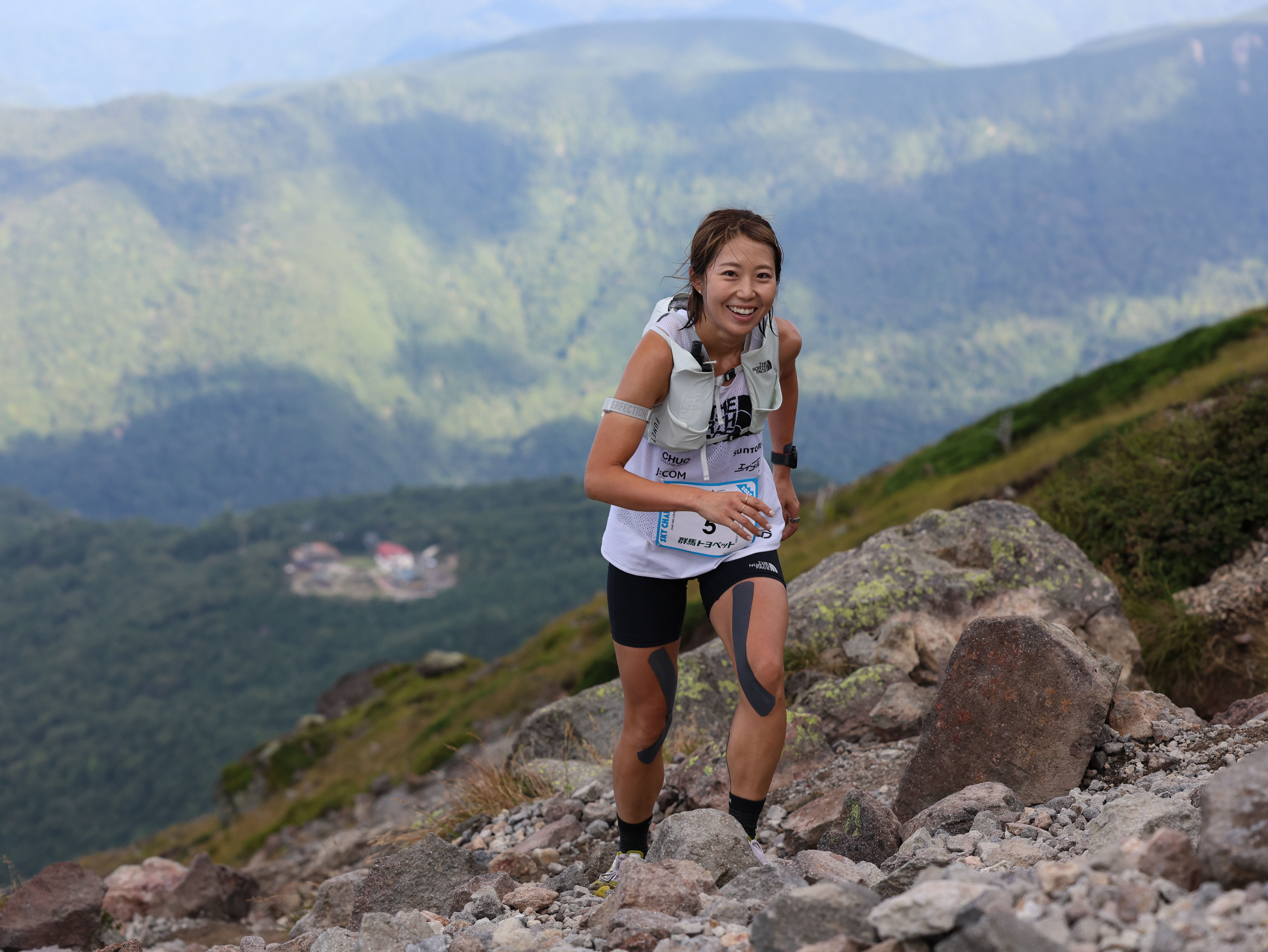
I hadn't heard much about it in Kansai, but in Tokyo, people who were running told me, "Running in the mountains is fun too." So I thought, "Okay, then I'll try running in the mountains," and I first started trail running.
About a year later, someone invited me saying, "There's mountain-running practice-want to join?" I went, and it turned out to be a practice session for sky running, and the instructor happened to be my current coach, Kazuaki Hoshino (sky running & SKIMO athlete / para-athletics & mountain sports coach). When I told him, "I'm from Osaka, but I used to ski," he said, "There's a sport called SKIMO. Want to try it?" I didn't really understand what it was then, but it felt interesting, so I said immediately, "I'll do it!" (laughs)
Suddenly, Straight Into a Race
―― So you were something of a pioneer, then?
Ueda: I guess so. I was an athlete who ran in the mountains in summer and did ski mountaineering in winter, so even though it was a sport I had barely heard of, I just had this intuitive feeling that it looked interesting. I didn't understand anything about it, but I said right there, "I'll do it." I thought they would invite me to a training session the following month or something-but instead, they invited me straight to a race. I learned how to use the equipment about ten minutes before the race started, and that was the beginning of SKIMO for me (laughs).
―― You just started out of nowhere-how did it go?
Ueda: I did think, "This is a bit unreasonable," (laughs) but even though it was tough, it was fun. Moving my body in nature felt like something that has a really positive effect on me.
―― Even though it was your first time, were you able to do it reasonably well?
Ueda: I managed to reach the finish line, at least.
―― Did it require a lot of grit?
Ueda: Yes. Unlike running, in SKIMO you climb on skis over snow, but for a first race, there were a lot of uneven, bumpy areas and the course was pretty difficult. I was thinking, "How am I supposed to get through this?" and tried things while not knowing if they were correct, but that uncertainty was part of the fun.
―― You also did track & field and trampoline. Do you prefer individual sports where you move your body on your own, rather than ball sports?
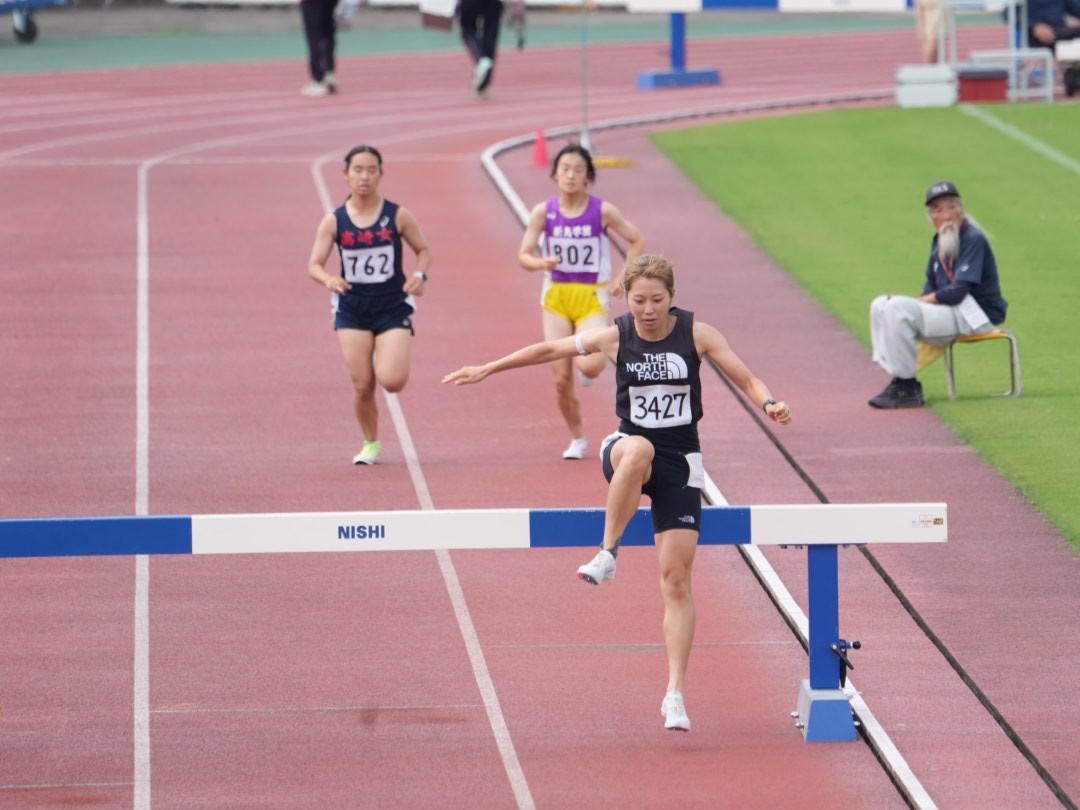
Ueda: Maybe so. At first, I vaguely thought I'd try ball sports. I went to trial sessions, but I was terrible at all of them and thought, "This just isn't for me," so I ended up joining the track team by process of elimination. I tried ball sports again in high school-went to trial sessions-but when the ball I received on a volleyball serve flew backward, I thought, "Yeah, no, this isn't going to work." So I thought, "Well, I did track before, so I'll at least go to the trial session," and when I did, the coach said, "If you've done track, then just do track," and I ended up joining again. I wanted to ski in university too, but I ended up running. It's not that I love individual sports—it's more like I arrived there through elimination, and just kept going.
I Feel How Powerless I Am
―― You really just like nature, don't you?
Ueda: Yes. I prefer sports done outdoors rather than ones played in gyms.
―― Is there a reason for that?
Ueda: Ever since I was little, I hardly read manga, watched anime, or played games. The only game I really played was Animal Crossing. I was the type who went outside to catch bugs with friends (laughs). So I've always felt most like myself when I'm outdoors.And after I started doing mountain sports, there's something else: when you face nature-like weather-that you can't control, you really feel that familiar phrase, "I'm powerless."
Even if you work in a comfortable environment on weekdays, you still build up stress. But by going to the mountains on weekends, all of that gets wiped clean, and I can work hard again for another week. I think mountains have that power. So even when I worked at Suntory, going to the mountains every weekend and resetting myself became a routine. In that sense, nature is something essential to me.
―― If you boil it down, it all comes back to "mountains"?
Ueda: Yes. I really do love mountains. Running and skiing are more like means to enjoy the mountains. At the base of everything is simply that I love mountains and nature.
―― When you say you enjoy them, is it more about interacting with living things and scenery, or more about overcoming challenges?
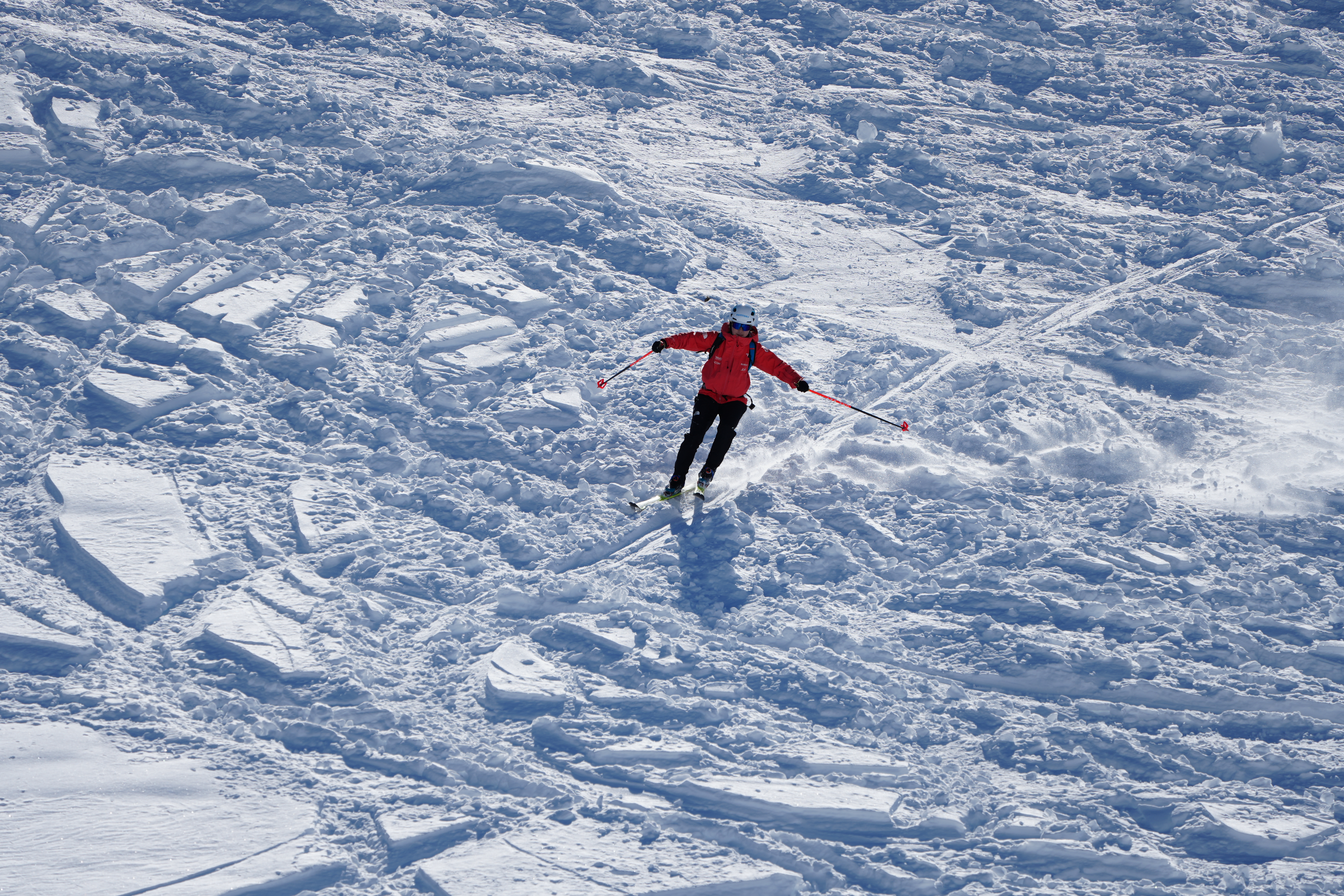
Ueda: I'd say both. Facing nature itself is really fun, and overcoming barriers in competition is fun as well. In nature, things don't go as planned, and thinking about how to deal with that is enjoyable. You might decide, "I'll climb up to here today," but then the weather turns bad and you have to decide, "Let's descend today." Then the task of going higher remains unfinished-that unpredictability is part of the fun.
I Might Be Able to Play More in the Mountains in Winter
―― Basically, you seem positive, don't you?
Ueda: …Hahaha (laughs).
―― Oh? Is that not the case?
Ueda: I personally don't think I've ever been very positive. That's why I try to be positive. When I'm expressing myself outwardly, I try to maintain positivity and completely leave out negative elements.
―― So you're negative when you're alone?
Ueda: I think I'm the type who feels a lot of anxiety. I panic when something irregular happens, thinking, "What if this happens?" So I prepare Q&A-like plans in advance: "If this happens, I'll do this. If that happens, I'll do that."
―― And in nature, it's all about those things, right?
Ueda: Yes. Unexpected things do happen, but in nature, you just have to deal with them-and I might be able to stay there with that strong mindset.
―― So there's that dual side. What did you find interesting when you first entered a SKIMO race?
Ueda: I think snow mountains are intimidating. Many people go mountain climbing in summer, but once it's a snow mountain, the number of people drops dramatically, and the risk rises. So I wanted to go to mountains in winter, but back then I thought it would be difficult to go alone without knowledge.
What impressed me first was how fast you could move and descend. I had always thought snow mountains took a long time, so discovering "there are these methods, these options" was amazing.
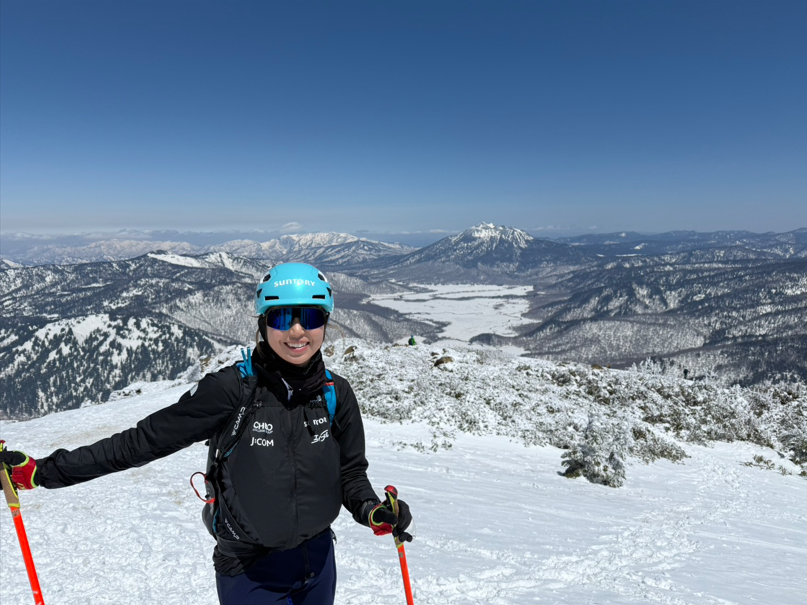
I was also excited by the discovery that "With these tools, I might be able to play more in the mountains in winter." I like pushing myself hard in the mountains (laughs). I'm not someone who goes just to see beautiful scenery. I like climbing with full focus and then seeing the view at the top. I also enjoy flowers and nature, but during training, I'm so concentrated that I don't notice them; I like the scenery I see at the summit at the very end. That's when I thought, "Ah, with this sport, I can experience it even in winter."
―― What's the most impressive view you've ever seen?
Ueda: In summer, it was when I first climbed Mount Nikko-Shirane. In winter, it was Mount Shibutsu. Abroad, last spring, I climbed the Breithorn, a 4,000-meter-plus peak. I thought, "It's even higher than Mount Fuji!" The weather was good, so I could see surrounding mountains, including the Matterhorn. The view was spectacular.
Entering the Zone, Cheeks Feeling Super Hot
――Extreme sports come with risks, and as you mentioned earlier, they probably increase concentration. Do you ever enter the "zone" (a state of hyper-focus)?
Ueda: I think I especially enter the zone during races.
―― What does it feel like then?
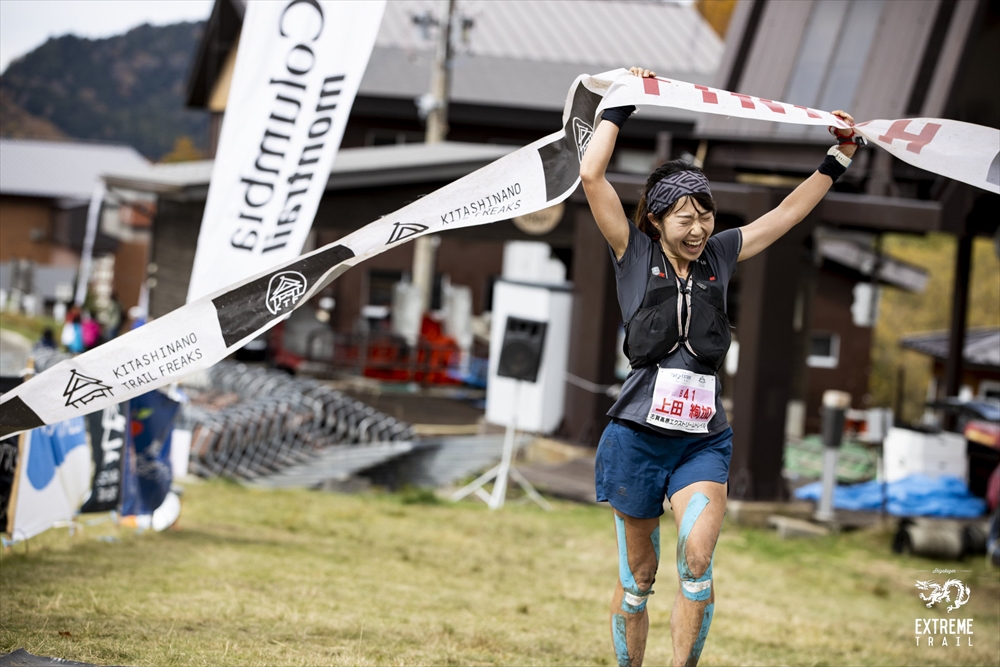
Ueda: When I'm in the zone, for a moment, sounds become hard to hear… When you're in the zone, you don't really think "I'm in the zone" (laughs). During the Japanese Sky Running Championships, I thought the scenery was beautiful-but that might have been just before entering the zone. Before entering, I felt very mentally relaxed.
In normal races, I tend to be focused on my position or the seconds behind other competitors, but the time I felt most in the zone and achieved a good result was just before entering a dangerous mountain section. When I first reached the slope, the sea of clouds spread out dramatically. Normally, I wouldn't pay much attention, but during the race I thought, "Wow, it's beautiful." I even said to the competitor next to me, "Look, the sea of clouds is amazing." Thinking back now, I'm sure I was a huge distraction (laughs), but at the time, I objectively felt, "It's rare to have this kind of composure."
When I'm in the zone, I don't feel like I'm in it, but even if there are roots or rocks, I absolutely don't fall. After finishing that section and reaching an easier zone, my head and face suddenly feel hot. My cheeks feel super hot, and I notice afterwards that the heat has rushed to my head.
―― Did you win that day?
Ueda: That day, I won the Japanese Championships. I was still working at Suntory, so my boss at the time even sent a bouquet to my house.
Enjoying the Mountains with Equipment Adapted to the Seasons
――We read your comment, "Since it became an Olympic sport, I have to compete." When did you feel that SKIMO was your sport?
Ueda: From the very beginning, I felt, "This suits me." At first, it wasn't about fully committing. Summer was my main focus, so I started SKIMO as off-season training for summer trail running and sky running. It was less about achieving results in SKIMO and more about winter training for summer.
Even back then, I realized that switching my equipment according to the seasons-running in shoes during summer and skiing when snow comes in winter-and enjoying the mountains this way suited me perfectly. I've always wanted to preserve that as part of my identity. Balancing summer and winter this way has always fit me, and I consider it my style.
――Did you immediately decide to aim for the Olympics when it became an Olympic sport?
Ueda: Not at all. I just thought, "Oh, it became an Olympic sport" (laughs). At the time, I was working at Suntory in Tokyo, and I honestly thought, "Even with the 'Try it!' spirit, aiming for the Olympics in a winter sport is impossible" (laughs). I believed I could reach a certain level in summer sports, but aiming for the Olympics in a winter sport-while balancing work at Suntory-seemed extremely difficult. So, I pretty much ignored it when it became an Olympic sport.
――So you initially ignored your own feelings?
Ueda: At first, it felt like someone else's matter. For about a year, I didn't clearly consider it, but SKIMO was always at the back of my mind. Once I realized how much it occupied my thoughts, I knew that if I didn't challenge myself, I'd definitely regret not seizing the opportunity.
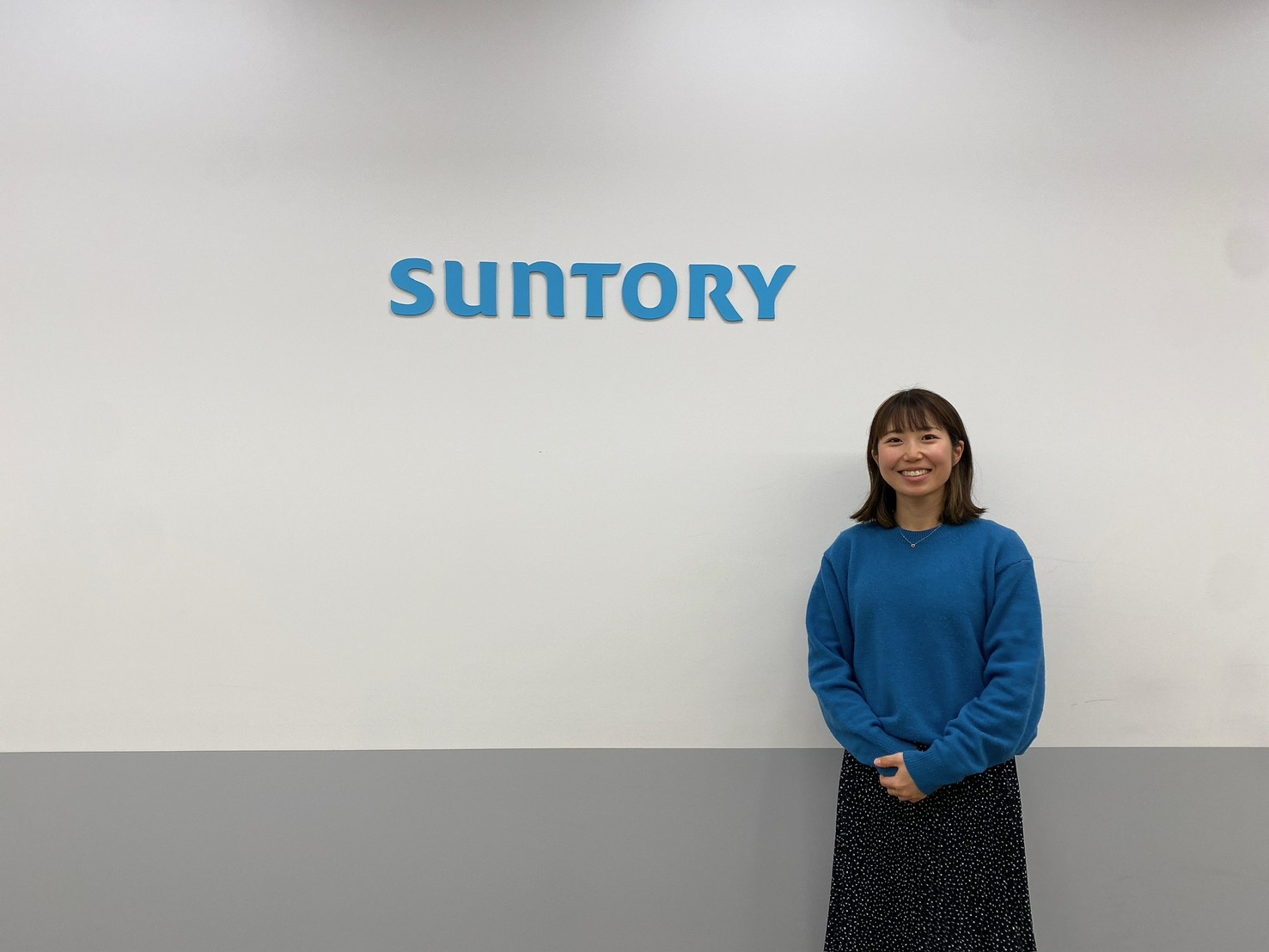
During my time at Suntory, I spent the first six years in sales and the last year in public relations. In both roles, when I asked my supervisors, "This is what I want to do, what do you think?", I never encountered anyone who started with a negative response. Suntory is such a great company that it did make me hesitate, but I had always been someone who thinks, "You won't know until you try." I learned that mindset at Suntory, and it made me want to challenge myself.
One of the triggers came from working in PR. In the summer of 2023, I was assigned to consecutive interviews with creators at factories and wineries. I deeply felt how much effort they put into delivering the best products to customers. At that moment, I reflected on myself: Am I facing my own opportunity wholeheartedly? Am I avoiding it? I realized I had to act. That was a major turning point.
――After deciding you had to do it, did it take a lot of courage to tell them, "I'm quitting"?
Ueda: It did, but I told my manager just two days later. I realized that continuing to think about it wouldn't change anything. I had reached a point where I had to act to feel at peace, and delaying it wouldn't help.
[To be continued…]
(Interview & Composition: Kazuyoshi Hariya)