Partner with Us
 Online shop


General
2025.06.20
The SPIRITS OF SUNTORY SPORTS series explores the "spirit" that lies within the activities of SUNTORY SPORTS, as well as their vision for the future, through long-form interviews from various perspectives.
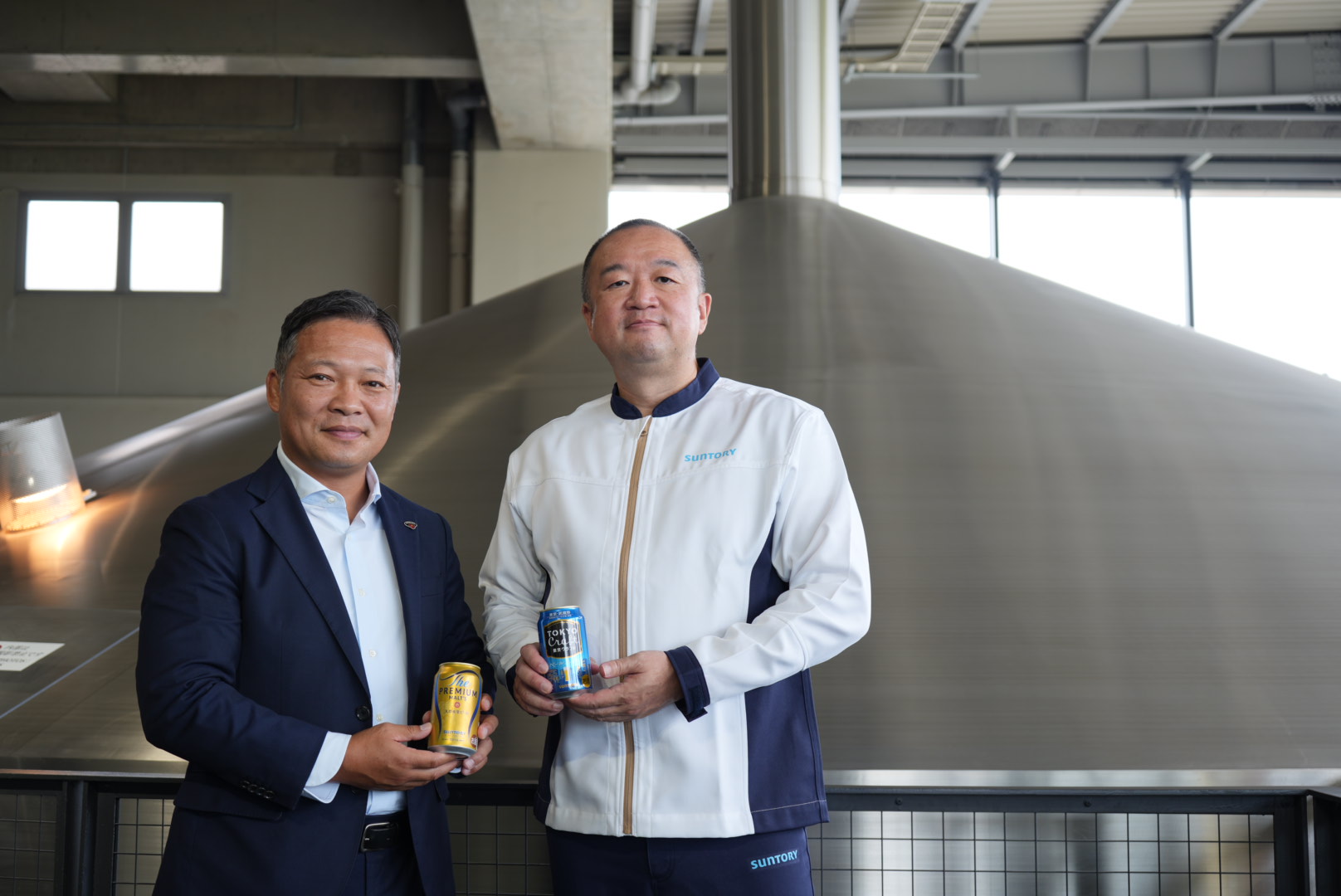
For Volume 1, we bring you the second half of a cross-talk session between Kiyonori Tanaka, General Manager of TOKYO SUNTORY SUNGOLIATH, and Taichi Maruhashi, Plant Manager of the Suntory Tennensui no Brewery Tokyo–Musashino, who is active on the front lines of beer production.
Two leaders speak under the theme "Beer and Rugby." In the second half, the conversation becomes even more passionate—this time while drinking beer together.
<SPIRITS OF SUNTORY SPORTS> Volume 1 "Beer and Rugby" – First Half
[Taichi Maruhashi]
Born in 1974 in Gunma Prefecture. Since joining Suntory, he has been involved in beer brewing. After working at the Gunma Brewery located in his hometown (Gunma), he studied abroad at the Technical University of Munich, Department of Brewing Science. After returning from Germany in 2009, he joined the Beer Product Development Department and was involved in the development of "The Premium Malt's 〈Japanese Ale〉Kaoru Ale" and "The Premium Malt's Master's Dream." Afterwards, he served as Chief Engineer of the Tone River Brewery, then as Principal Developer and later Director of the Beer Product Development Department. He currently serves as Plant Manager of Suntory "Tennensuino Brewery" Tokyo/Musashino.
[Kiyonori Tanaka]
Born in 1975 in Hyogo Prefecture. General Manager of TOKYO SUNTORY SUNGOLIATH. After playing scrum-half (SH) for the Meiji University Rugby Club, he joined Suntory. After retiring as a player, he served in roles such as recruitment and team director, working on building the club's organizational foundation. In 2017, he became head coach of Meiji University Rugby Club and led the team to its first national university championship in 22 years. He served as SUNGOLIATH head coach from 2021 to 2023, and has been in his current role since 2024.
Improving Taste While Keeping It Consistent
― Beer is made at multiple plants with the same taste—but are you also continuously changing the beer to make it better?
Maruhashi: I believe consumers feel it as "the usual taste," but if we make the exact same taste continuously, people will become accustomed to it and start feeling it's less delicious. Rather than simply reproducing the same thing, we apply what we learn from each brewing cycle into the next and keep improving—The Premium Malt's included. We continuously work to make every beer better. If we don't, customers will get tired of it.
― So you drink beer daily for that reason?
Maruhashi: That's right (laughs). It may look like we're just drinking and chatting about nothing, but ideas for new products sometimes come out of those moments—"Ah, this might be interesting if it existed." Those casual sparks are surprisingly important.
― Mr. Tanaka, as a coach, did you also come up with new tactics or formations while drinking?
Tanaka: I think it's the same. After games, I sometimes drink with coaches and staff, and while talking—"This, that, maybe that should've been different"—ideas come up that we wouldn't say in formal meetings. Meetings can feel a bit formal, so even coaches might not express their honest opinions. Over beers, discussions become more active, and someone might suggest something great and I go, "Why didn't you say that in the meeting?" (laughs)
Maruhashi: Now I feel like drinking (laughs).
Tanaka: After this, I'd really like to talk more over beer (laughs).
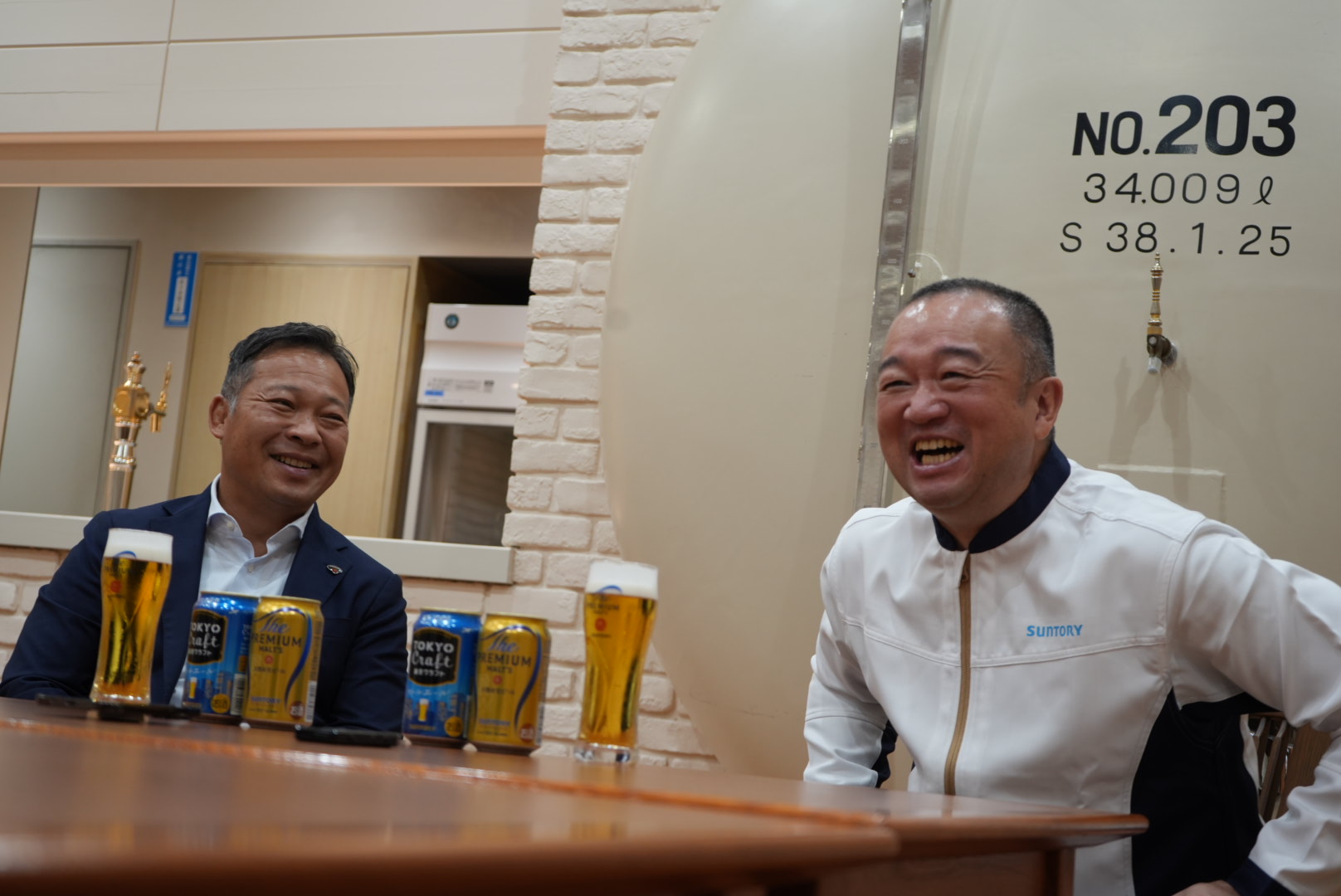
― Then let's have a toast here.
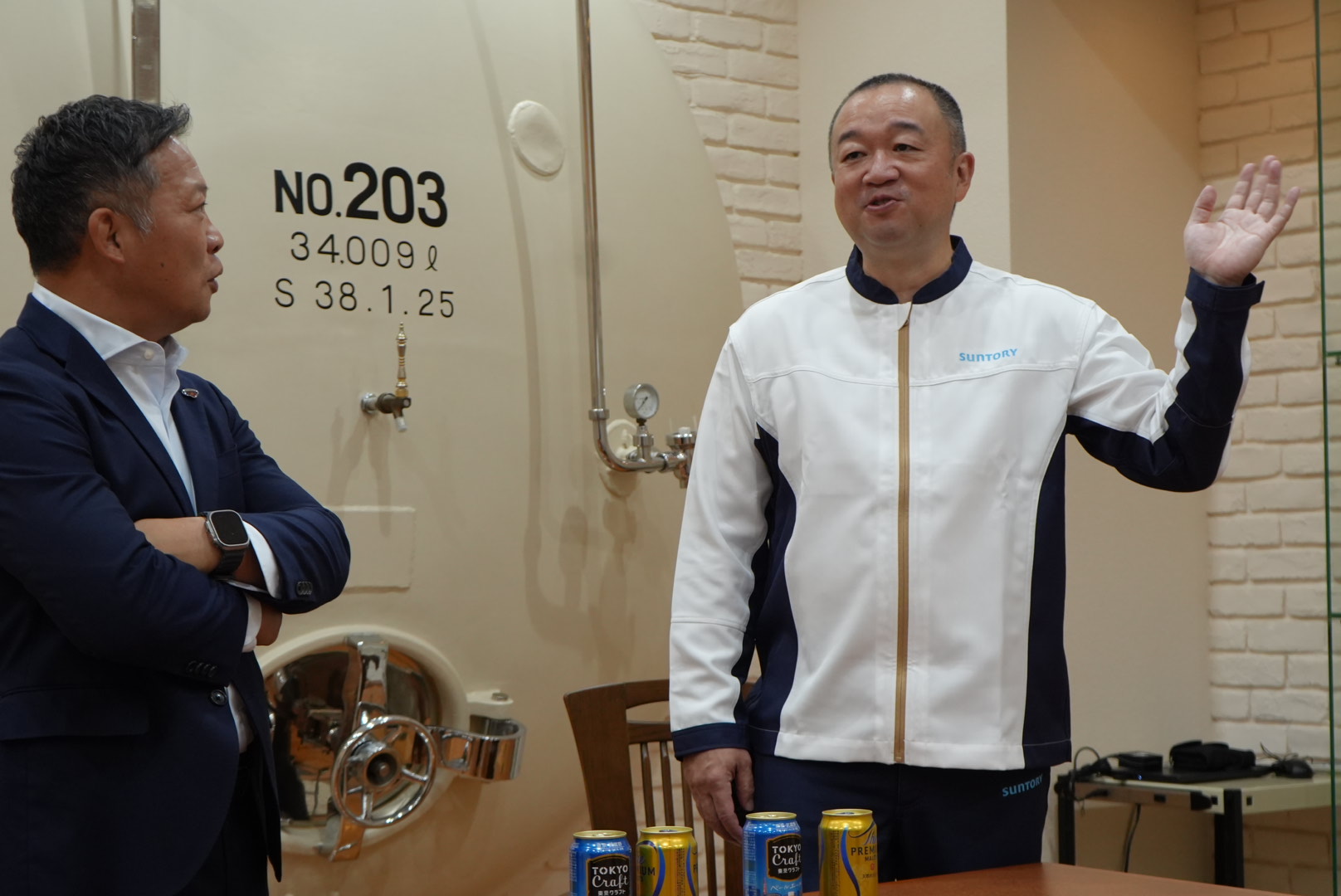
Tanaka: Ahhh, delicious! Maruhashi-san's story is very educational. You mentioned earlier that you went to Germany—rugby is similar in that we also travel abroad for research. We talk to many teams, and rugby is quite universal. When Japanese players join overseas clubs, they can adapt because tactics are similar. With beer production overseas, are manufacturing methods or philosophies completely different?
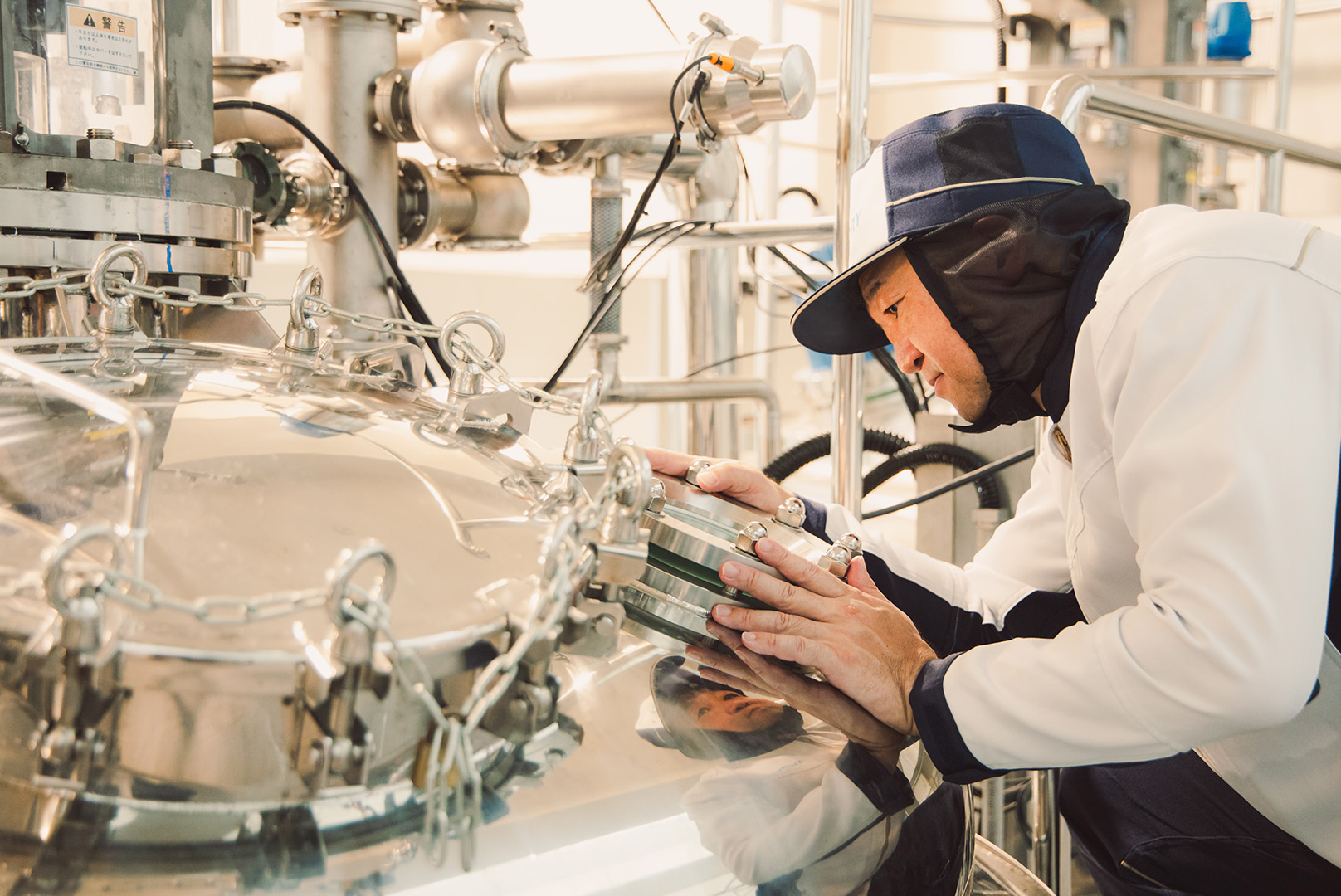
Maruhashi: Brewing equipment doesn't differ greatly. Beer-making from wall paintings 5,000 years ago in Egypt is still basically what we do today. Mechanisms have become metal, more durable, more efficient, and we understand processes better—but fundamentally it's still malt and hops. So I believe I could work in breweries anywhere in the world immediately. I sometimes think, "This part could be done better," and they would feel the same about us—similar to rugby. Information exchanges happen quickly, and once we observe together, discussions deepen immediately.
Brewers love beer, and because of that, they tend to love people too. When I say abroad, "I'm a brewer," they say, "Oh really? Let's have a drink together!"
Constantly Proposing New Things
― What's the most delicious beer you've ever had?
Maruhashi: When we finally completed Master's Dream. The entire team drank it, made eye contact, and nodded. After 10 years of development, we finally said, "We've done it."
― Mr. Tanaka?
Tanaka: Definitely the beer after winning a championship. I want to taste that again and again.
― What is "Suntory-style beer" for you, and what is "Suntory-style rugby" for you?
Maruhashi: For me, Suntory beer should always be playful and bold—"mischievous beer." And that mischievous beer is then finished more carefully than anyone else.
― What does "mischievous" mean?
Maruhashi: The Premium Malt's was once criticized—"Who can drink beer with such aroma!" But now, that aroma is standard for premium beer. We want to create beers that change the market, always proposing new things and taking on challenges.
― You endured being told "No one will drink that" for a long time.
Maruhashi: Yes. When we released Kaoru Ale, people said, "Who will drink something this sweet?" But we believed the era of fruity, easy-to-drink beer would come.
Tanaka: We've always upheld Aggressive Attacking Rugby—that is Sungoliath, that is Suntory's rugby. What matters is how to evolve it for victory. Rugby itself changes, other teams evolve, so we must update ourselves. That's what "Suntory-like" means—not clinging to tradition, but changing what must change to get results.
Mischievous Beer × Mischievous Rugby
— Since Tanaka wore number 9, that means you and Maruhashi formed the 8–9 combination, correct?
Maruhashi: Oh no, I'm nowhere near his level (laughs).
Tanaka: It's the 8–9 combination from the scrum, right? (laughs). One of the great things about rugby is that when you meet someone for the first time and say "I used to play rugby," the conversation turns to "Where did you play?" and it gets lively—you immediately become part of the rugby family. I think that's something different about rugby compared to other sports. So, it's not about the level you played at—whether it was in high school, grassroots rugby, or professional—rugby allows people to connect right away, and that's what's great about it. So I don't think it's about levels. But there aren't many people who tear their ACL three times (laughs).
Maruhashi: I actually had quite a lot of grit, you know (laughs).
Tanaka: I've torn mine too, but even tearing it twice is enough to really get you down.
— When you watch rugby, Mr. Maruhashi, do you mainly focus on the position you used to play?
Maruhashi: That might be true. When I watch a player's performance, I go "Ah…" and things like that (laughs). Now there are more overseas players, and I think team building has become very difficult, but how are you handling that?
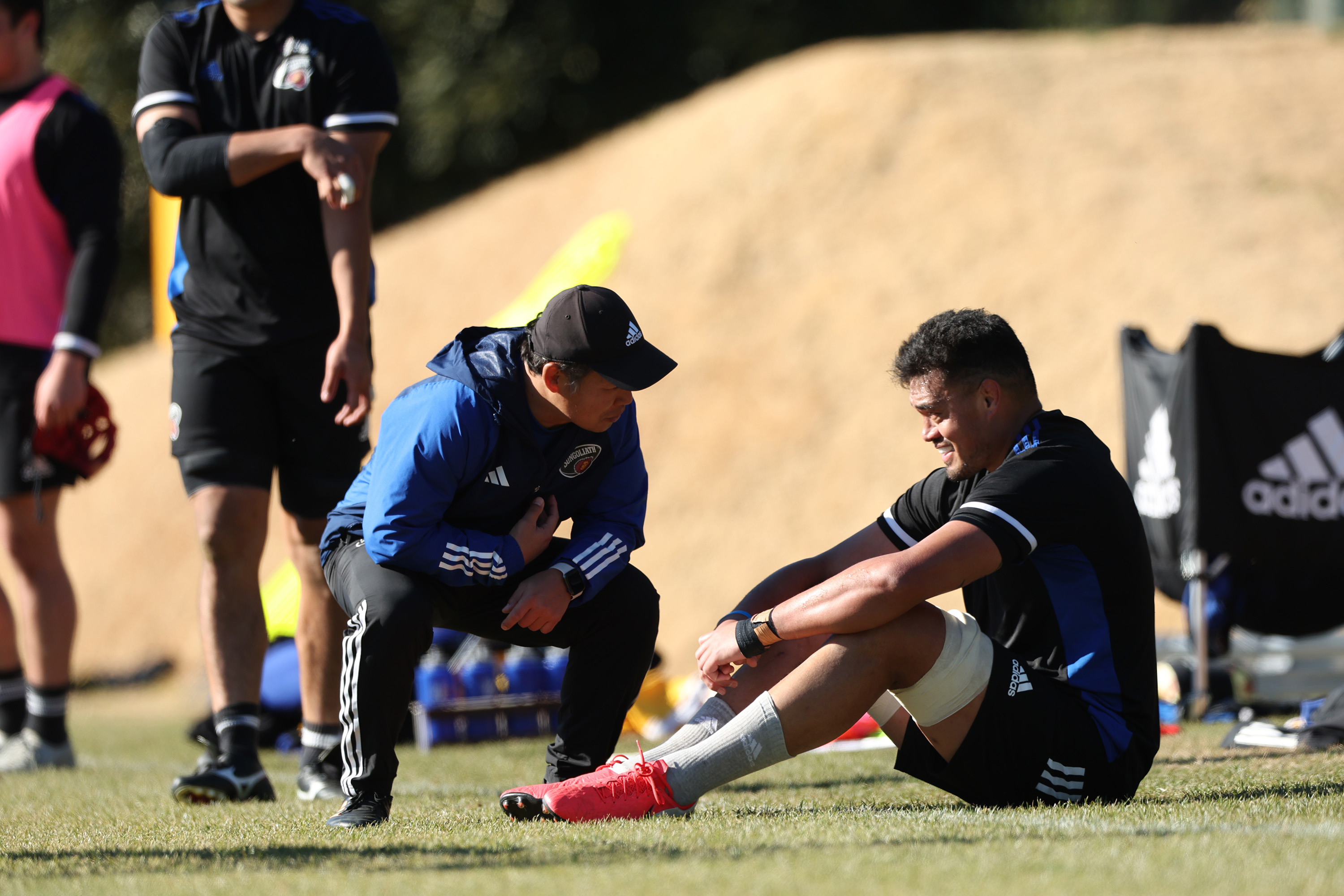
Tanaka: First of all, one thing is that we have them study Japanese culture and the Japanese language. In the past, foreign players had more of a "brought-in helpers" feel, and I think there was a sense that foreign players were treated a bit preferentially. But now it's not like that; they are coming to play at a Japanese club, so we also have them learn the club's history. Just the other day, we had a session where they learned about Suntory's philosophy, and also about how to engage with alcohol socially, and all the players and staff listened together. We have them first understand the company's philosophy and history, and Japanese culture. Then we create groups in a way that foreign players and Japanese players don't end up separated, and at the start of the week we do mini-games and things so that everyone can interact.
Maruhashi: When I once had the opportunity to observe a practice, everyone looked like they were really enjoying themselves, right?
Tanaka: It was a friendly, cheerful atmosphere, wasn't it. I feel like it might be okay if there were a bit more tension though (laughs). Compared to the past—maybe it's a generational thing, or maybe it's just the times—but that old sense of tension, or that sense of rivalry, might not be as strong now.
Maruhashi: When I was playing rugby, we weren't allowed to drink water during practice, and if someone collapsed, they would pour a kettle of water on you (laughs).
What Can We Do to Reach No.1
Tanaka: Since Mr. Marubashi is the factory manager, there are staff members, people working at the factory, and younger people coming in, and I imagine he often notices differences in ways of thinking and ways of communicating. Are there difficulties in dealing with that?
Maruhashi: Yes, there are. In the past, I think there was a world where you made good beer with just determination, but now I am always thinking about how to improve performance by making use of various ways of thinking and individual personalities.
Tanaka: I understand. That might be something you can say across the whole company. I would like to have this kind of conversation next time while drinking beer at a bar (laughs).
— Do you sometimes make those young people become beer lovers like that?
Maruhashi: Even if they don't like drinking, I want them to like making beer, or to have some point they like within the process of making it. What we are doing now is creating opportunities for the young members to see the faces of customers who actually drink our beer, hear their voices, actually sell beer themselves, and talk directly with customers. I hope they can understand, "The work I'm doing is really important for customers, it has an impact," and through that gradually understand their own significance and the meaning of their work.
— I heard that sometimes you make beer saying, "This is what I want to make," putting marketing aside. Why is that possible?
Maruhashi: While I'm here, I want to make Suntory Beer number one in Japan. The reason I chose Suntory Beer is that it was the beer company with the lowest market share. I focus only on what I can do to make it number one.
— Is the hint for that "being a little mischievous"?
Maruhashi: I think the beers unique to Suntory are "mischievous." We make mischievous beers with the utmost care in the world.
Tanaka: Within Suntory, the word "mischievous" comes up quite often—mischievous employees, for example. The president also uses it frequently. Even in rugby, mischievous players are absolutely necessary.
[End]
(Interview & Composition: Kazuyoshi Hariya)
(Photos: Aki Nagao, Mai Muramatsu)