Partner with Us
 Online shop


General
2025.06.20
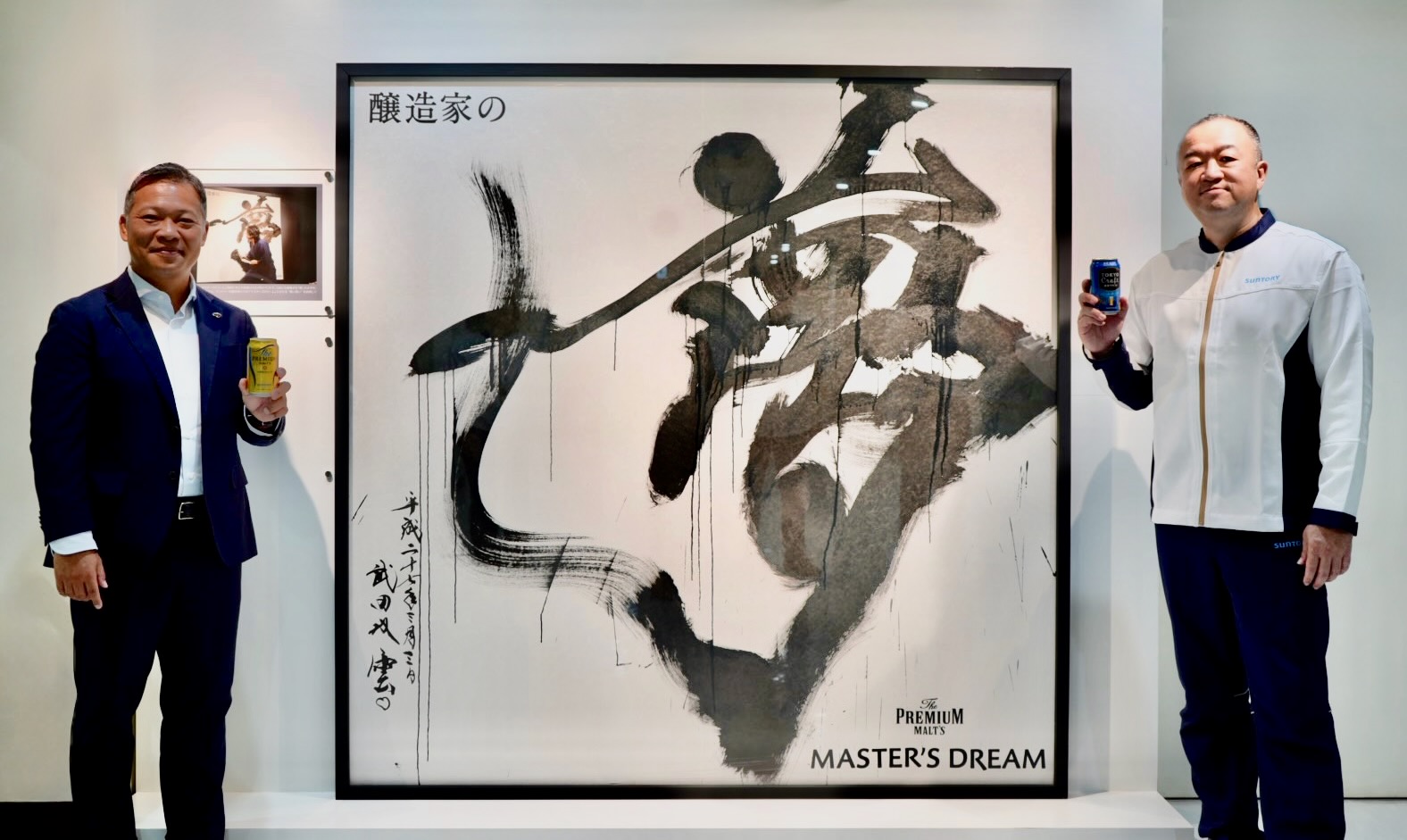
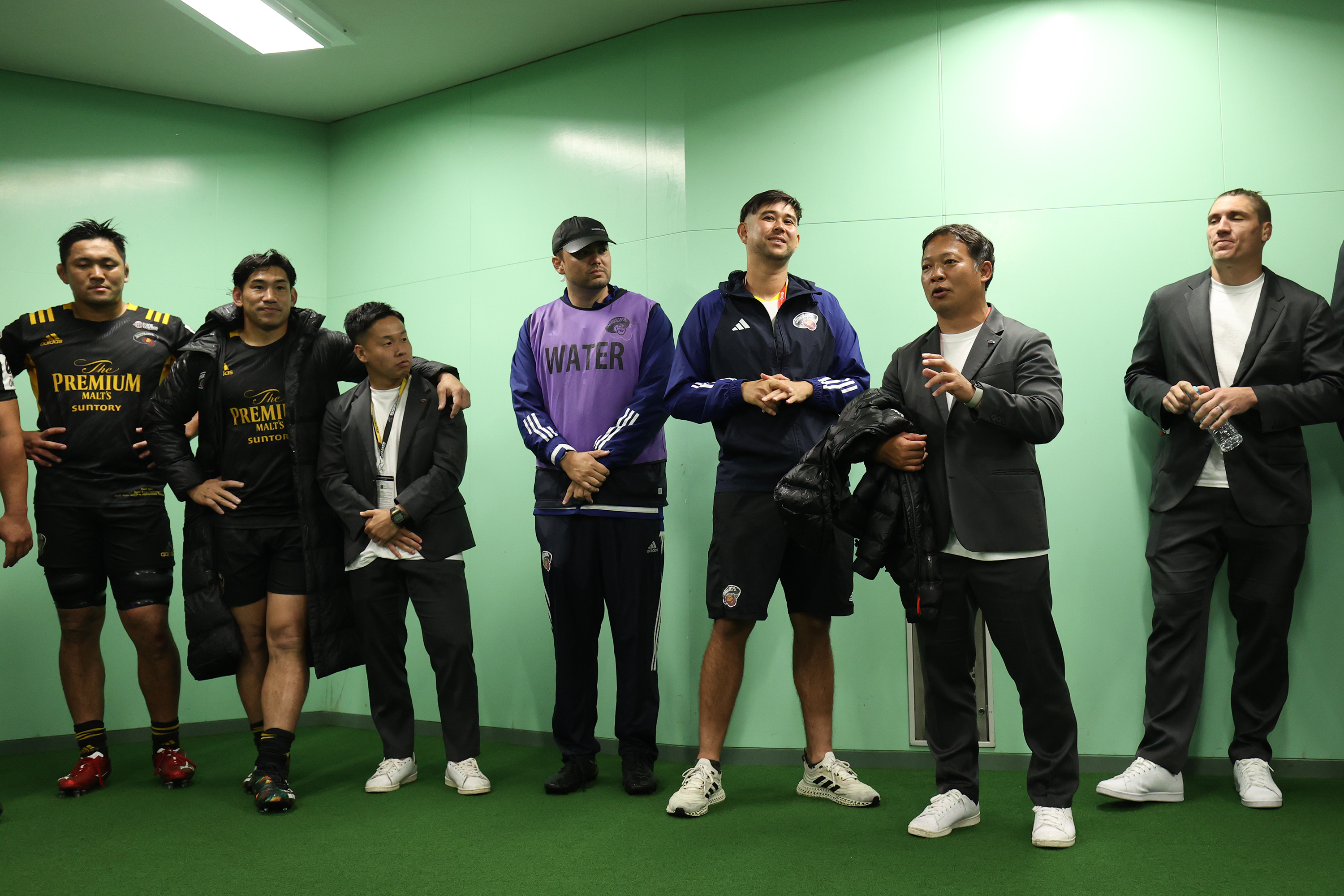
Two leaders who guide organizations aiming to be No.1 in Japan in their respective fields. With the theme "Beer and Rugby," they speak together for the first time.
[Taichi Maruhashi]
Born in 1974 in Gunma Prefecture. Since joining Suntory, he has been involved in beer brewing. After working at the Gunma Brewery located in his hometown (Gunma), he studied abroad at the Technical University of Munich, Department of Brewing Science. After returning from Germany in 2009, he joined the Beer Product Development Department and was involved in the development of "The Premium Malt's 〈Japanese Ale〉Kaoru Ale" and "The Premium Malt's Master's Dream." Afterwards, he served as Chief Engineer of the Tone River Brewery, then as Principal Developer and later Director of the Beer Product Development Department. He currently serves as Plant Manager of Suntory "Tennensuino Brewery" Tokyo/Musashino.
[Kiyonori Tanaka]
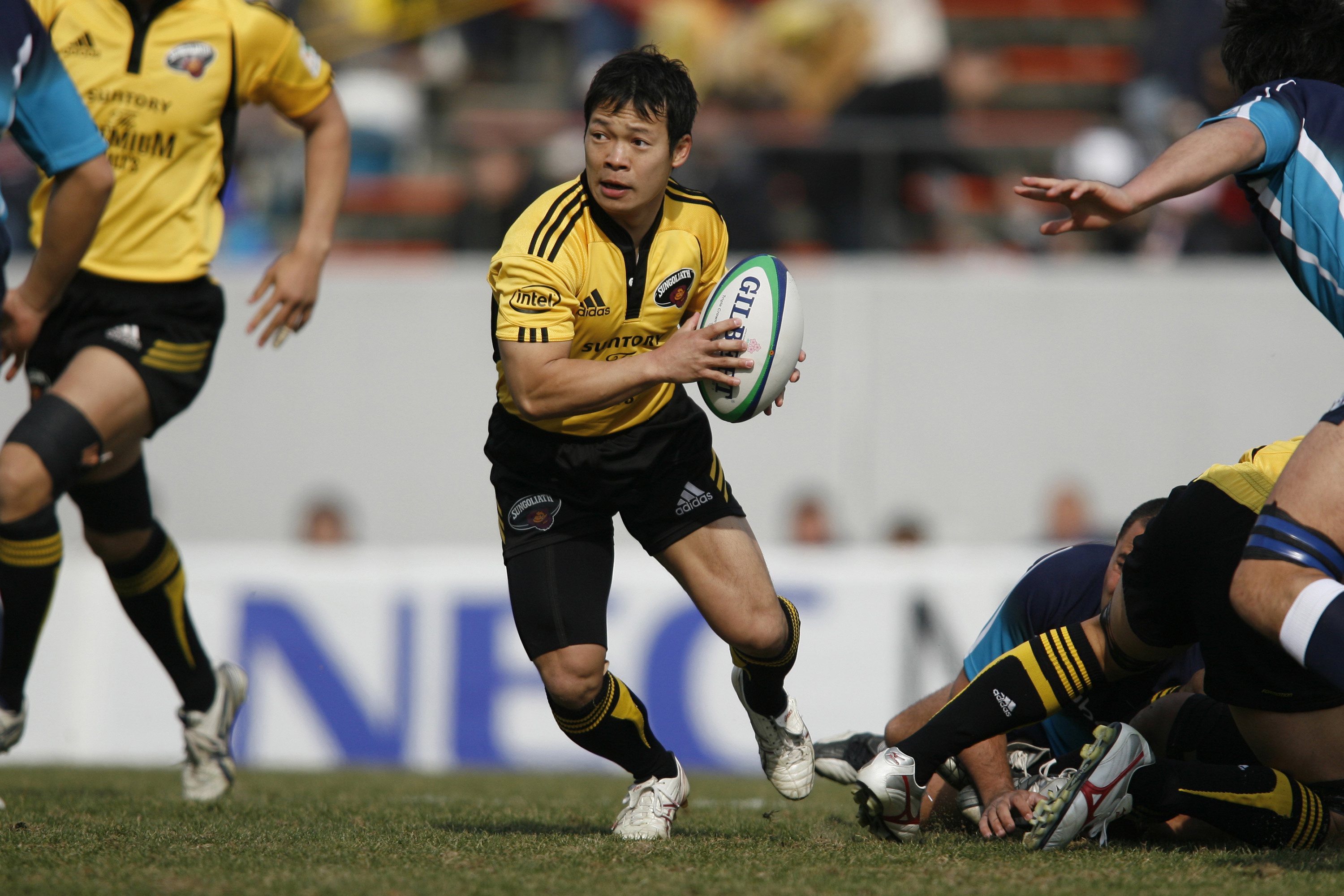
Born in 1975 in Hyogo Prefecture. General Manager of TOKYO SUNTORY SUNGOLIATH. After playing scrum-half (SH) for the Meiji University Rugby Club, he joined Suntory. After retiring as a player, he served in roles such as recruitment and team director, working on building the club's organizational foundation. In 2017, he became head coach of Meiji University Rugby Club and led the team to its first national university championship in 22 years. He served as SUNGOLIATH head coach from 2021 to 2023, and has been in his current role since 2024.
Life Itself × The Extraordinary
-Mr. Maruhashi, we hear that you spend your days off doing "beer tasting comparisons." Is that what you usually do on your days off?
Maruhashi: More or less, yes. I already have meal plans for weekends about two to three months ahead. And of course, these meals are enjoyed along with beer (laughs).
-Even on your days off, beer. Does that mean you like beer that much?
Maruhashi: Beer is very deep. No matter how much I drink, I still may not understand beer completely.
-What would you need to understand in order to say you truly understand beer?
Maruhashi: Beer has a 7,000-year history. People have been enjoying beer all this time. But why do humans desire beer so much? There are many things still unknown.
-Why do you desire beer so much?
Maruhashi: When I was a student, at first I simply liked its taste. But at some point, I began to feel, "This is such an interesting and powerful drink." Even when I was exhausted to the point of breaking, drinking beer made me feel energized (laughs). And behind that, I learned that there are people who devote their lives to making beer. I was moved. I wanted to join those people. I wanted to fill the world with the joy of beer. Eventually I said, "Please let me make beer," and joined Suntory. That dream came true, and now I am in the position of making beer. It's fun to make it, and it's fun to drink it. I'm happy. It's my reason for living-my life itself. When I'm making beer, I don't feel like I'm "working." It feels like I'm continuously "frolicking with beer."
-Mr. Tanaka, do you also drink a lot of beer?
Tanaka: I originally played sports, so as an athlete I was careful about my daily condition. That's why I didn't have the habit of drinking regularly. I don't drink at home; I mainly drink outside. After becoming a working adult and joining Suntory, I came to know the deliciousness and depth of beer. The beer you drink with everyone after a match tastes great. For me, beer is more of an "extraordinary" drink.
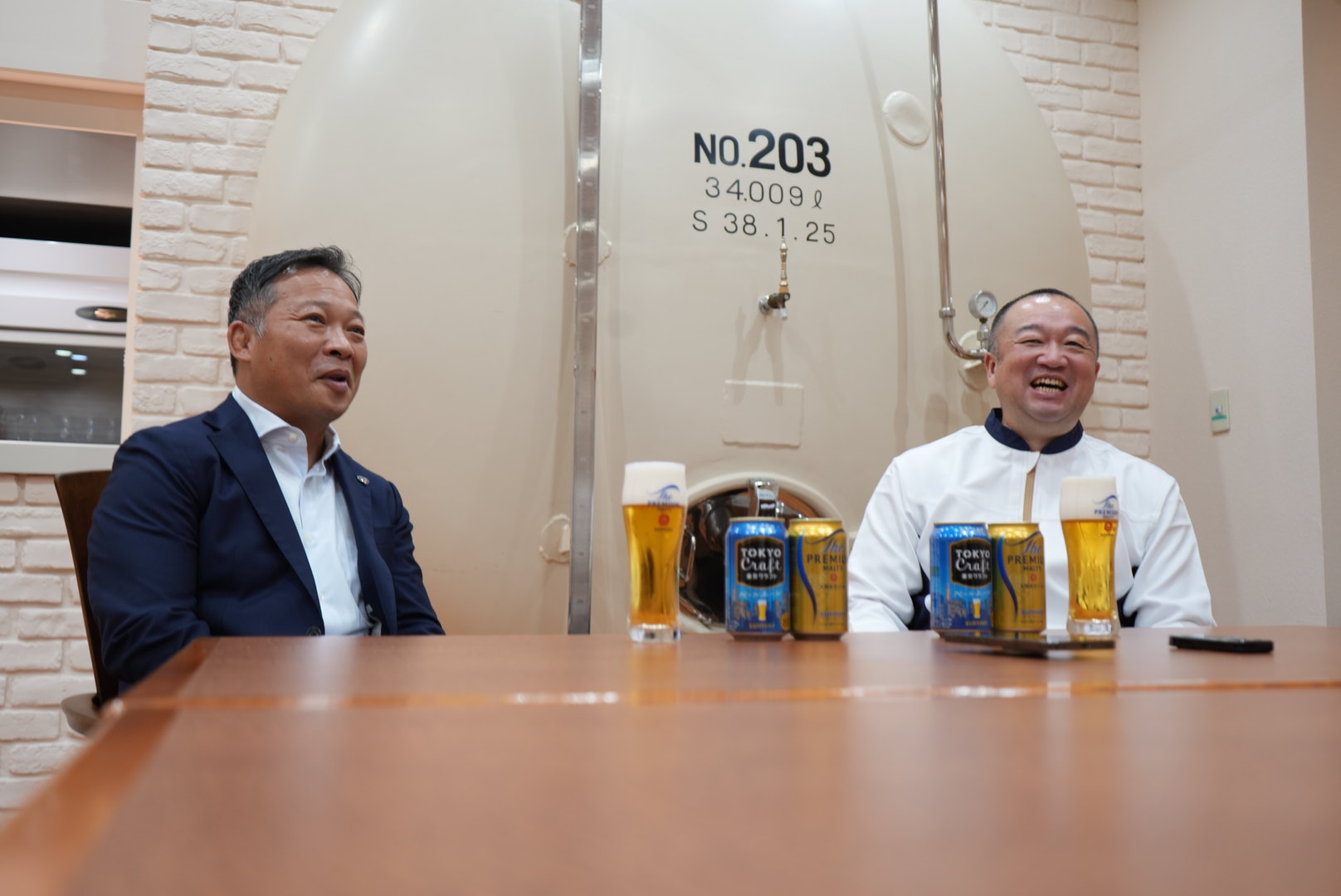
The Long Time Spent Enduring Feels Good
-When you drink, is it beer?
Tanaka: Yes, beer. Many people drink beer for the first glass and then switch to highballs, but I tend to continue drinking beer for quite a while.
-You joined Suntory because you wanted to play rugby there, right?
Tanaka: I wanted to win the Japan championship, and I wanted to someday become a Japan national team member. And "that kind of club is Suntory." Nowadays, professional players are the norm, but back then, there were no pros, so when choosing a team, it was important to think about how I could contribute to the company in my career after retiring from rugby. Everyone at Suntory was doing sales, and it looked cool.
-In your job, were you involved with beer?
Tanaka: Yes, because I was in sales. At that time, our market share was around 7%. It was a time when even selling 10 cases was difficult. I would clean the warehouse of liquor stores and say, "There's space here, can we put in 20 cases?" Things you don't see much now. It was that era. Nostalgic.
-Mr. Maruhashi, do you watch rugby?
Maruhashi: I do. I played rugby in high school. I was a forward, number 8, but I tore my anterior cruciate ligament, so I gave up rugby.
Tanaka: You tore your anterior cruciate ligament as a high schooler?
Maruhashi: I had three reconstruction surgeries. I reconstructed it, tore it again, reconstructed it again-repeated that three times. I spent about half the time in rehab (laughs).
-You must have been quite a powerful player.
Maruhashi: Maybe so (laughs). I went into games before being fully healed, tore it again-that's common among high schoolers (laughs).
-If not for the injury, would you have wanted to continue rugby?
Maruhashi: No... I felt I didn't have the sense for it. I kept going with guts alone. I don't think I could have gone much further.
-How about watching rugby?
Maruhashi: I always cheer. Last season was frustrating. At the match venues, our brewery runs beer sales, so I was selling beer while watching the games.
-What do you think is the charm of rugby, a sport you yourself played?
Maruhashi: The charm of rugby is that the long time you spend enduring feels good (laughs). You endure and endure, and when a try is scored, that "Ohhh!!" feeling is great. That sense of "moving forward but not quite" is the most interesting to watch. And of course, it's unique that you can't throw the ball forward.
-Does that connect to beer brewing?
Maruhashi: It might. The Premium Malt's took 20 years from development to launch. Even when you think it might become delicious, it doesn't, and you repeat that over and over. Little by little, you make it better, and finally it's completed. How long you can endure-there's something in common.
Beer Is a Drink for Enjoying Rhythm
-Today's theme is "Beer and Rugby." I think these two match very well. Why is that?
Maruhashi: I believe beer is a drink for enjoying rhythm. There's the rhythm of switching modes-"You worked hard today, cheers!" And there's the rhythm of eating, like "Gyoza, gyoza, beer!" The appeal of beer is that it allows you to create these breaks. This kind of enjoyment is unique to beer. When watching rugby, you endure and endure, then "Wahh!" and take a gulp of beer. Actually, when watching rugby, you're often not drinking-you're concentrating on the match. But the moment a try is scored, you drink. The rhythms match.
-Mr. Tanaka, do you think rhythm is important in rugby?
Tanaka: It's important. Not only when passing, but also when constructing the game. When building phases, up to the third phase from a set play is designed. Sometimes a fast rhythm is built in, sometimes a slow one. For the game-makers, rhythm is essential.
-So you understand well what Mr. Maruhashi is saying?
Tanaka: Not really (laughs). "Gyoza, gyoza, beer!" is easy to understand, but beer goes with many things. After the initial toast, hardly anyone drinks just a little. You toast, take a good gulp, and immediately order the next drink. There's a tempo.
-When does beer taste especially delicious to you?
Tanaka: After winning a match and drinking with everyone. Also when traveling. Beer is delicious when traveling. I like drinking beer in various places, including abroad.
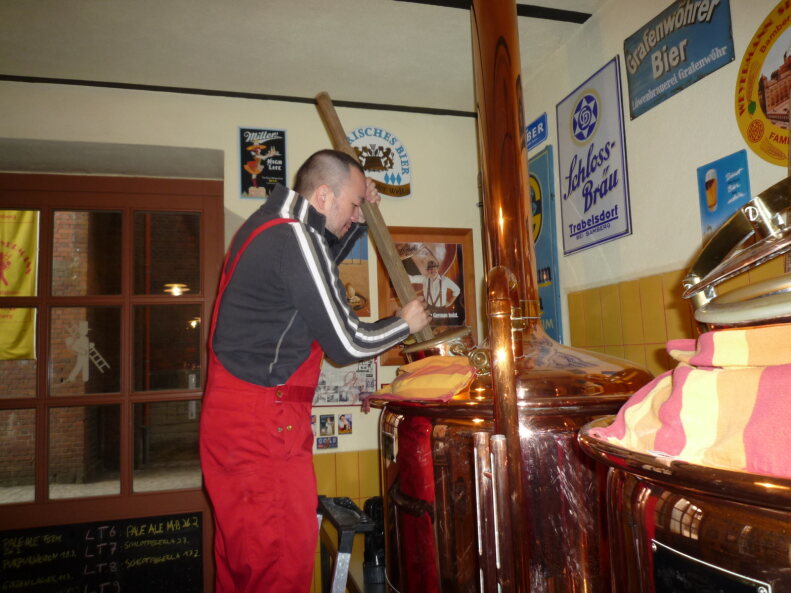
-Speaking of abroad, Mr. Maruhashi, you trained in Germany for three years. Did you volunteer for that?
Maruhashi: I had a very insular mindset and only thought about "making Japanese beer better." I didn't think about overseas at all. My narrow perspective was noticed by my boss, who said, "Go." (laughs)
-How was it, after spending three years there?
Maruhashi: It was tough. I didn't understand German at all, and suddenly I was thrown into a town where only German was spoken. I couldn't even shop (laughs).
-Did you learn beer brewing by watching and imitating?
Maruhashi: Yes. First I studied German, and once I could speak it, I was able to talk with local brewers. From there I visited many breweries, drank various beers, had passionate discussions with many brewing professionals, and organized my own thoughts about beer. That was the three years.
What Is My Strength?
-You were told "Beer is people" by someone at the Technical University of Munich. Did that change your way of thinking?
Maruhashi: It did. What humans can do in beer brewing is very limited. Malt, hops, and water, which are blessings of nature, create wort, and yeast ferments and produces alcohol. Humans only assist in that process. Human involvement is very small. Yet the final product that brings joy to people is created by humans. In beer brewing, the role of humans is to draw out the goodness of agricultural ingredients. Before that, I had approached beer as something like an industrial product-something mechanically mass-produced. That changed greatly.
-This idea that "there are limits to what humans can do" also applies to building a team. Mr. Tanaka, how do you think about your role as GM?
Tanaka: I think leadership and management each have a style. For example, in corporate leadership training, you learn "These are the leaders we seek." But outputting exactly what you input is very difficult. If you try to apply it as-is, it feels like someone else-not you-is leading. So at some point, I started asking myself, "What is my strength?" I believe my strengths are communication and observing people, noticing things, and giving feedback. So now, I focus on bringing out those strengths when building the team and interacting with people.
-Are there times it goes well and times it doesn't?
Tanaka: Yes. Things don't often go well. For us, "going well" means winning. But continuing to win is very hard. Another important part is improving the organization. These days I think improving the organization increases the probability of winning. There's always luck involved, so what matters is standing on the stage where you have a chance to win.
[To be continued]
(Interview & Composition: Kazuyoshi Hariya)
(Photos: Aki Nagao, Mai Muramatsu)